
Uttaradhyayan Sutra
Added to library: September 2, 2025
Summary
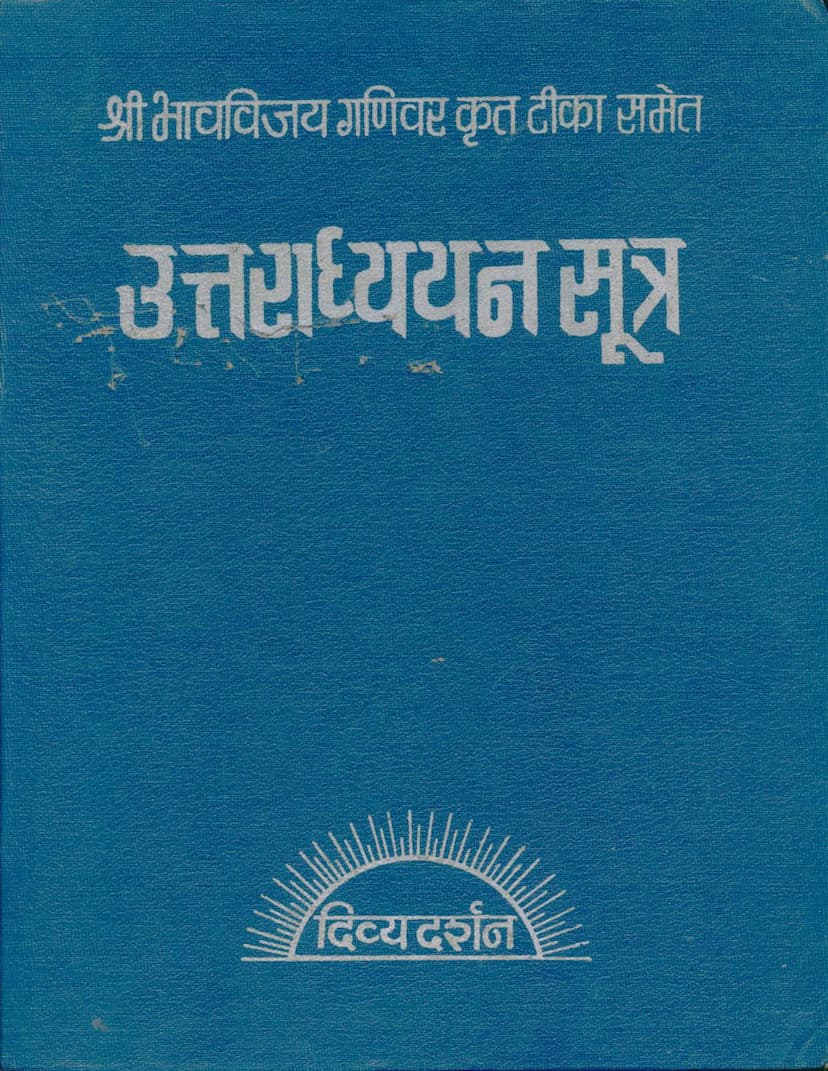
The Uttaradhyayan Sutra, authored by Bhavvijay Gani and published by Divya Darshan Trust, is a foundational text within Jainism. The provided pages offer a glimpse into its content, particularly focusing on the initial chapters and the extensive commentary by Bhavvijay Gani.
Here's a comprehensive summary in English of the provided text, based on the key themes and introductions:
Overall Purpose and Significance:
The Uttaradhyayan Sutra is presented as a repository of profound teachings from Lord Mahavir Swami, serving as a guiding light for those embarking on the spiritual path towards self-realization. The text emphasizes the importance of mastering one's inner self and adhering to virtuous conduct. The commentary by Bhavvijay Gani aims to clarify the deeper meanings within the sutras, making them accessible to a wider audience.
Key Themes and Concepts Introduced:
- Vinaya (Humility and Respect): The initial chapters strongly highlight the virtue of Vinaya, particularly in the context of respecting teachers and elders (gurus). The text meticulously details the characteristics of both the "vinita" (one who possesses humility) and the "avinito" (one who lacks it). The extensive narrative stories illustrating these concepts underscore their practical importance in spiritual discipline.
- The Importance of Virtuous Conduct: Throughout the text, there's a consistent emphasis on adhering to right conduct ("sheel") and avoiding wrong actions ("dooshil"). The consequences of both are illustrated through various examples, reinforcing the Jain principles of karma and its impact on one's spiritual journey.
- The Twenty-Two Pariṣahas (Trials and Tribulations): A significant portion of the initial chapters (as indicated in the index and later in the provided text) is dedicated to the concept of Pariṣahas. These are described as the twenty-two challenges or difficulties that a mendicant (bhikshu) must patiently endure and overcome on the path to liberation. The text lists them, including hunger, thirst, heat, cold, insects, nakedness, and various forms of suffering and insult. The commentary likely elaborates on how to face and conquer these trials with equanimity.
- The Nature of the Soul and Liberation: While the initial pages focus on foundational virtues, the underlying goal of the Uttaradhyayan Sutra is to guide individuals towards liberation (moksha). This involves understanding the nature of the soul, its bondage to karmas, and the means to break free from this cycle.
- The Value of Knowledge and Right Understanding: The text repeatedly stresses the importance of gaining right knowledge ("jain dharma") and understanding the true nature of reality. This is achieved through studying scripture, listening to the teachings of the enlightened, and internalizing their wisdom.
- The Role of the Guru: The reverence and importance of the Guru (spiritual teacher) are paramount. The commentary itself is a testament to the Guru's role in illuminating the path. The sutras also detail the proper etiquette and respect to be shown to the Guru.
- Consequences of Actions (Karma): The narrative examples throughout the text serve to illustrate the law of karma – that actions have consequences, and one must be mindful of one's deeds, both in this life and in future existences.
- Discipline and Self-Control: The emphasis on controlling one's senses, mind, and speech is evident. The contrast between the disciplined (vinita) and undisciplined (avinito) individual highlights the necessity of constant vigilance and self-mastery.
- The Ultimate Goal: Moksha (Liberation): The entire framework of the Uttaradhyayan Sutra points towards the ultimate aim of achieving liberation from the cycle of birth and death. This is attained through a life of strict discipline, adherence to virtues, and the eradication of karmic impurities.
Structure of the Text (as inferred from the index):
The table of contents reveals that the Uttaradhyayan Sutra is divided into numerous chapters (Adhyayans), each focusing on specific aspects of Jain philosophy and practice. Some of the chapter titles mentioned include: Vinayashruta, Parikshadhya, Khshankadhya, Pramadapradyayan, Akamavarniya, Shulakshulak, Nirgranthiya, Urabhradhya, Kapiliyadya, Namipravrajya, Drumapallabha, Bahushrutapuja, Harikeshiya, Sambhutiya, Ishukariya, Samabhikshuka, Brahmacharya, Samadhisthana, Pashramasaniya, Sanyamana, Mrigaputriya, Mahanirgranthiya, Samudrapaliya, Rathnemiya, Keshigautamiya, Pravachanamatru, Yajniya, Samachari, Khalukiya, Mokshamarga, Samyaktva, Parakrama, Tapomarga, Charanavidhi, Pramadasthana, Karmaprakriti, Lishya, Angaramarga, Jiva-ajiva Vibhakti. This vast array of topics suggests a comprehensive exploration of the Jain path.
Commentary by Bhavvijay Gani:
The presence of Bhavvijay Gani's commentary ("Bhavvijay Gani krit Tika samet") signifies a detailed explanation and interpretation of the original sutras. This commentary is crucial for understanding the nuances, historical context, and practical application of the teachings, making the text accessible and relevant to practitioners.
In essence, the Uttaradhyayan Sutra, as presented in these pages, is a profound and multifaceted guide for spiritual aspirants, emphasizing ethical conduct, self-discipline, and the relentless pursuit of liberation through detachment and virtue, all illuminated by the wisdom of Bhavvijay Gani's commentary.