
Upmiti Bhav Prapancha Katha
Added to library: September 2, 2025
Summary
Here's a comprehensive summary of the Jain text "Upmiti Bhav Prapancha Katha," compiled from the provided Gujarati text, focusing on its key themes, narrative structure, and Jain philosophical concepts:
Upmiti Bhav Prapancha Katha: A Summary
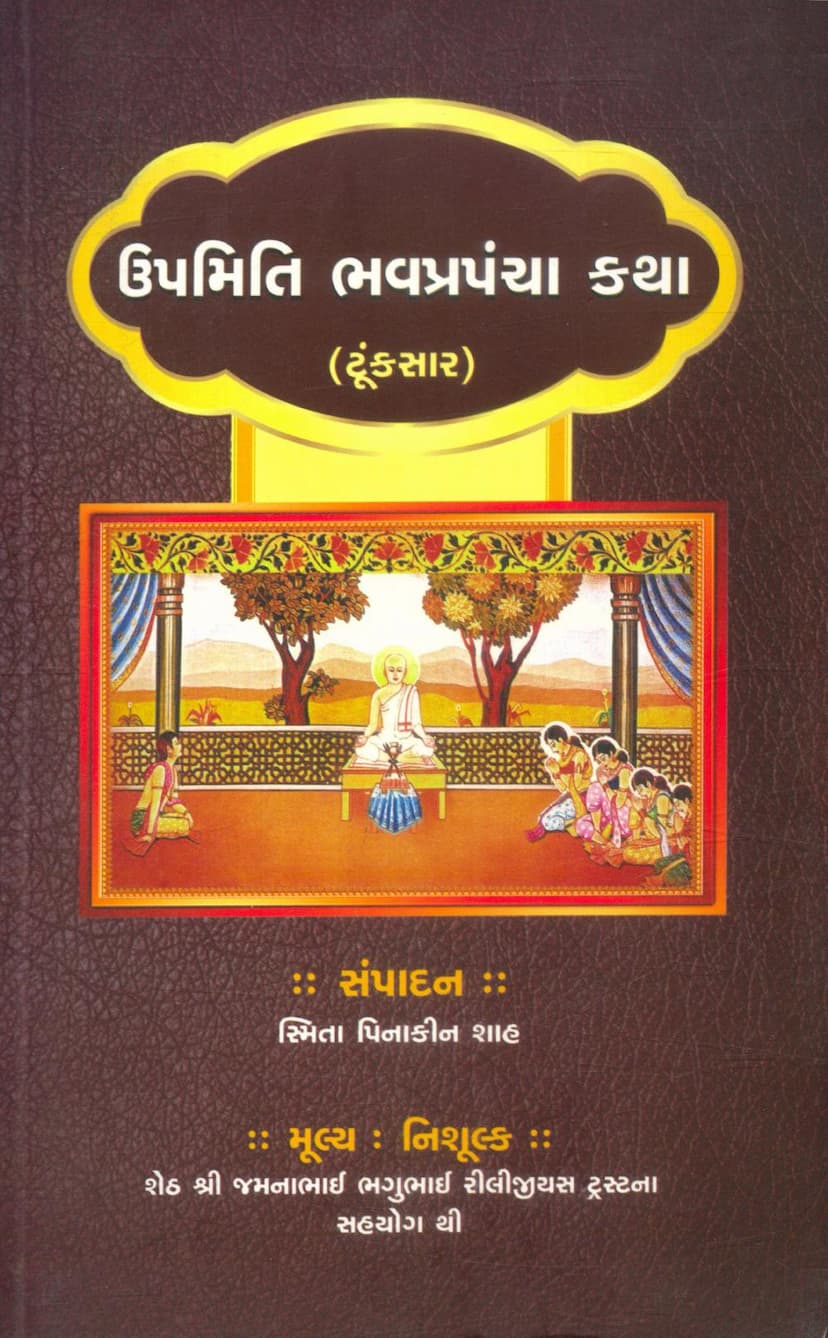
"Upmiti Bhav Prapancha Katha," edited by Smita Pinakin Shah and made available with the support of the Seth Shri Jamnabhai Bhagubhai Religious Trust, is a condensed version of a significant Jain allegorical work. The original text, a monumental undertaking of approximately 16,000 verses and over 2,000 characters, was authored by Siddharshi Gani. This summary aims to provide an accessible understanding of its profound narrative and philosophical teachings.
The Genesis of the Katha and its Purpose:
The text begins with a personal account from the editor, Smita Shah, who was inspired to create this condensed version after attending a camp on the "Upmiti Bhav Prapancha Katha." She found the original text complex and sought to simplify it for others, particularly for her elder relative who found it challenging. The editor emphasizes the profound influence of Pandit Jitubhai's clear and impactful discourse, which motivated her to undertake this work. She gratefully acknowledges the Gujarati translation by Shri Motichand Kapadia and expresses hope that this summary will encourage readers to engage with the original text.
The Core Narrative and Allegory:
The "Upmiti Bhav Prapancha Katha" is described as the world's first allegorical story. "Upmiti" signifies metaphors, "Bhav" means the cycle of existence (samsara), and "Prapancha" refers to expansion or proliferation. Thus, the Katha is an expansive narrative that uses various metaphors and allegories to illustrate the intricacies and delusions of the worldly cycle.
The author, Siddharshi Gani, draws inspiration from his own life experiences and the teachings of Jainism. The story takes the reader on a journey through numerous lifetimes, starting from the lowest realms of existence (nigoda) and progressing through various rebirths, highlighting the arduous path a soul undertakes to attain a human birth and ultimately liberation.
Key Themes and Jain Philosophical Concepts:
The summary, presented in chapters (Prastav), systematically unfolds the core themes and Jain philosophical principles:
-
The Nature of Samsara and the Soul's Journey: The Katha emphasizes the vastness and cyclical nature of samsara, where a soul transmigrates through countless lives, experiencing suffering and delusion. The first prastav introduces the concept of the three "families" of a soul: the external (parents, siblings, spouse) and two internal families – one representing virtuous qualities (forgiveness, detachment, knowledge) and the other representing vices (anger, greed, delusion). The allegory illustrates how attachment to the external and the negative internal family leads to continued suffering, while the virtuous internal family offers a path towards liberation.
-
The Struggle Against Vices and Delusions: The narrative vividly portrays the soul's entrapment by vices and delusions, often personified as characters.
- Anger (Vaishvanar): Represented as a fiery entity, anger is shown to corrupt even the most virtuous individuals, leading to destruction and suffering. The story of Nandi Vardhan (a manifestation of the soul) and his descent into wrath due to the influence of Vaishvanar highlights the devastating consequences of uncontrolled anger.
- Greed (Sagar/Lobh): The character of Dhanashekhar (another manifestation) exemplifies the insatiable nature of greed, which leads to unethical practices, the neglect of righteous paths, and ultimately, downfall. The story of Dhanashekhar's pursuit of wealth and his encounters with characters like Maya and Steya (theft) illustrate how greed blinds individuals to true values and leads to suffering.
- Delusion (Mahamoh) and Ignorance (Ajnan): Mahamoh is depicted as a powerful force that ensnares the soul, obscuring its true nature and leading it astray. Characters like Mrushavada (falsehood), Maya (deception), and Ajnan (ignorance) play significant roles in perpetuating this cycle of delusion.
- The Importance of Right Conduct and Knowledge: The Katha consistently emphasizes the need for right knowledge (Samyak Darshan), right conduct (Samyak Charitra), and right faith. Characters like Sadagam (representing scriptures and true knowledge) and the various virtuous kings and ascetics guide the soul towards these principles. The influence of virtuous companions like Punyoday (meritorious karma) and wise counselors like Sadagam and Prajnawishala (wisdom) are contrasted with the destructive influence of vices.
-
The Power of Allegory and Symbolism: The entire Katha is built on a rich tapestry of allegorical characters and situations.
- Cities and Kingdoms: Cities and kingdoms often represent states of consciousness or aspects of the soul's journey (e.g., Astamulaparyat Nagar for Samsara, Chitrasundar Nagar for virtuous thoughts).
- Characters as Virtues and Vices: Characters like Vaishvanar (anger), Sagar (greed), Maya (deception), Mrushavada (falsehood), and Mahamoh (great delusion) personify the vices that lead the soul astray. Conversely, characters like Sadagam (scriptural knowledge), Punyoday (merit), Subuddhi (good intellect), Kshanti (patience), and Dharmabodhakar (one who imparts dharma) represent the virtues and aids on the spiritual path.
- The Guru's Role: The Guru or a wise preceptor plays a crucial role in guiding the soul, explaining complex truths, and offering solutions to overcome obstacles. The story of Siddharshi Gani's own temptation and his Guru's intervention with the text "Lalitavistara" serves as a meta-narrative on the power of spiritual guidance.
-
The Path to Liberation: The Katha illustrates that the ultimate goal is liberation (Moksha) from the cycle of birth and death. This is achieved through persistent spiritual practice, understanding the true nature of the soul, renouncing worldly attachments, and cultivating virtues. The story repeatedly shows how even after acquiring immense wealth or power, the soul remains bound until it turns towards the spiritual path.
-
The Interplay of Karma and Effort: While the concept of karma (Karmaphal) and fate (Bhavyata) plays a significant role in shaping the soul's experiences, the Katha also highlights the importance of individual effort (Purusharth) and the potential for spiritual transformation through right understanding and practice. The narrative demonstrates that even from the lowest forms of life, the soul can ascend through virtuous actions and spiritual guidance.
Structure and Content of the Prastavs (Chapters):
The summary is organized into prastavs, each focusing on a different phase of the soul's journey and exploring specific vices and virtues:
- Prastav 1: Introduces the concept of allegorical storytelling, the author's inspiration, and the nature of the soul's "families." It begins with a detailed allegory of a beggar who finds solace and guidance within a palace, symbolizing the soul's initial confusion and its potential for transformation.
- Prastav 2: Focuses on the complexities of human life and the consequences of karma, using characters like Karmafal (King of Karma), Kalaparinati (Queen of Time), and their son Sumati (good intellect). It delves into the battle between foresight and ignorance, the importance of wisdom, and the subtle influences that shape a person's destiny.
- Prastav 3: Explores the destructive nature of anger (Vaishvanar) and its debilitating effects on the soul. It highlights the importance of controlling emotions and seeking guidance from wise teachers.
- Prastav 4: Delves into the consequences of falsehood (Mrushavada), pride (Shailraj), and sensual desires, illustrating how these vices lead to immense suffering and a decline in spiritual progress. It also touches upon the concept of different types of individuals based on their spiritual inclination.
- Prastav 5: Focuses on the destructive grip of greed (Sagar/Lobh) and the allure of sensual pleasures, using the characters of Dhanashekhar and Vamdev. It depicts the struggle between the desire for material wealth and spiritual liberation, and the pivotal role of virtuous companions and teachers.
- Prastav 6: Examines the impact of lust (Maithun) and greed, emphasizing how these vices lead to moral degradation and further entanglement in the cycle of suffering.
- Prastav 7: Introduces the concept of virtuous spiritual teachers and their guidance in overcoming the cycle of birth and death. It explores the path to spiritual awakening through detachment, right knowledge, and virtuous conduct.
- Prastav 8: Offers a comprehensive overview of the soul's journey, highlighting the interplay of various karmic influences and the importance of understanding the true nature of the self, virtues, and vices. It explains the significance of the four Purusharthas (dharma, artha, kama, moksha) and the ultimate supremacy of Moksha. It also describes the inner kingdoms and the battles waged within the mind.
Conclusion:
"Upmiti Bhav Prapancha Katha" is a profound allegorical masterpiece that serves as a spiritual guide, urging readers to introspection and the pursuit of righteousness. It illustrates the arduous yet ultimately rewarding path of the soul towards liberation, emphasizing the power of virtuous conduct, the guidance of wise teachers, and the eternal struggle against vices and delusions that bind us to the cycle of samsara. The summary, by making this complex narrative accessible, hopes to inspire a deeper appreciation for Jain philosophy and the timeless wisdom contained within this revered text.