
Traditionell Indische Vorstellungen Uber Die Fuse In Literatur Und Kunst
Added to library: September 2, 2025
Summary
Here's a comprehensive summary of the provided Jain text, "Traditionell-indische Vorstellungen über die Füße in Literatur und Kunst" by Willem B. Bollée, focusing on its content related to feet in Indian tradition, literature, and art:
This text explores the multifaceted and deeply symbolic significance of feet in traditional Indian culture, drawing extensively from literature, art, and religious practices. The author, Willem B. Bollée, meticulously examines how feet are represented and understood across various contexts, from everyday life to profound religious and philosophical concepts.
Key Themes and Concepts:
-
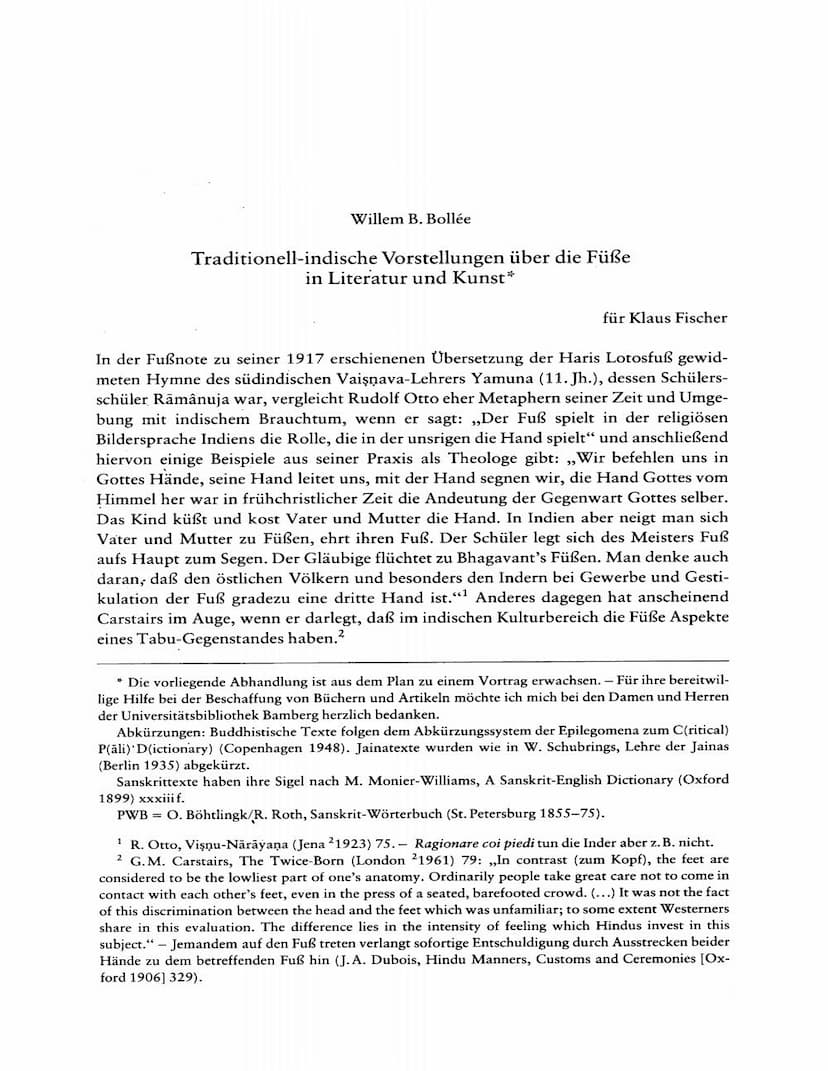
Feet as a Metaphorical and Symbolic Representation: The article begins by contrasting the Western emphasis on the hand in religious imagery with the Indian tradition's focus on the feet. Rudolf Otto's observation that the foot plays the role of the hand in Indian religious symbolism is highlighted, with examples like bowing at feet, seeking refuge at divine feet, and the foot acting as a "third hand" in gestures and work.
-
Feet in Language and Idioms: Bollée delves into how feet are incorporated into proverbs, metaphors, and personal names. He discusses phrases related to pain and cold feet, as well as expressions indicating power dynamics (e.g., being placed between someone's feet). The text also touches upon the semantic development of "foot" to mean "part" or "portion."
-
Feet in Religious and Philosophical Discourse:
- Divine Feet: The text emphasizes the reverence for the feet of deities and revered figures. The concept of "pada" (foot) is analyzed in names and titles, signifying respect and refuge (e.g., bhagavat-pāda, śrī-śankarācārya-pāda).
- Mahāpuruṣa Feet: The feet of great beings (mahāpuruṣa) are described as bearing auspicious marks, such as the wheel (cakra), which are significant in identifying future enlightened beings or rulers. These marks are often depicted on Buddha and Jina footprints.
- Footprints (Padam): The significance of holy footprints is discussed, noting their connection to magical and liturgical meanings. Footprints are seen as visible expressions of a person's presence and are used in contact magic.
- Feet as a Source of Purity and Healing: Washing and drinking the water used to wash sacred feet (pādodaka or caraṇāmṛta) is presented as a practice of purification and spiritual benefit. The feet of saints and deities are believed to have healing properties.
- Asceticism and Feet: The practice of standing on one foot (stantę pede ā l'indienne) as a form of extreme asceticism is highlighted, symbolizing detachment from the earthly realm and a striving for liberation.
-
Feet in Ritual and Social Customs:
- Proskynesis and Circumambulation (Pradakṣinā): The act of circumambulating a revered person or object, with feet playing a central role in showing respect, is detailed.
- Foot Washing: The ritualistic washing of feet is described as an act of hospitality, purification, and a way to remove spiritual impurities or ward off evil spirits.
- Foot Binding: While not a widespread practice in India like in China, the text notes the cultural aversion to certain feet-related actions, like placing feet towards fire.
- Vows and Oaths: Oaths sworn by one's feet or the dust of one's feet are mentioned, indicating the profound significance attributed to them.
- Footwear: The various materials and types of footwear are discussed, along with the regulations and symbolism associated with wearing them in different contexts (e.g., monks, students, royalty).
-
Feet in Art and Iconography: The text refers to artistic representations of feet, particularly the mahāpuruṣa-lakṣaṇas on Buddha and Vishnu's feet, and the symbolic meaning of lotus feet.
-
Feet as Tools and Weapons: The use of feet in combat, from simply stepping on an opponent's head to more symbolic acts, is noted. The power associated with a well-placed foot is recognized.
-
Feet of Animals and Mythical Beings: The article extends its analysis to the feet of animals and mythical creatures, such as the tiger, peacock, and Nāgas (serpent deities), examining their symbolic associations and appearances in art and literature.
-
Feet of Deities in the Air: The concept of divine feet not touching the earth, signifying their celestial and transcendent nature, is discussed, along with the depiction of gods and goddesses in various aerial postures.
-
The Concept of "Footsteps" and their Significance: The article explores the idea of footprints as not just physical traces but also as carriers of symbolic or magical power, influencing contact magic and omens.
-
The "Soul Seat" Theory: The author touches upon the possibility that feet, particularly the soles, might have been considered a seat of the soul or life force, potentially explaining some taboos.
In essence, Bollée's comprehensive study reveals that in traditional Indian thought, feet are far more than mere physical appendages. They are imbued with profound religious, social, and symbolic meaning, serving as markers of respect, purity, divine presence, spiritual power, and even the very foundation of existence and liberation. The text highlights the rich tapestry of beliefs and practices surrounding feet, underscoring their central role in the Indian worldview.