
Snatra Puja Introduction
Added to library: September 2, 2025
Summary
Here's a comprehensive summary in English of the provided Jain text, "Snatra Puja Introduction," focusing on the explanation of the vow of non-violence for householders (Shrāvak):
Snatra Puja Introduction: Understanding the Vow of Non-Violence for Householders (Shrāvak)
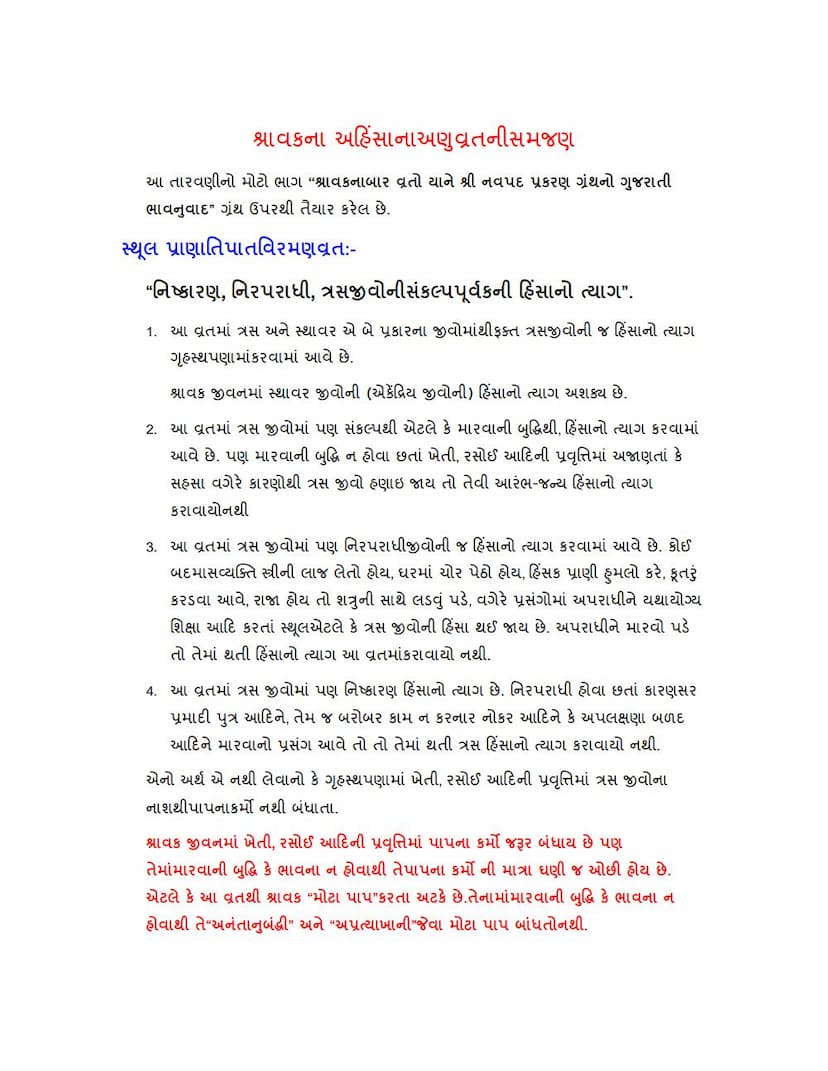
This document, drawn from the Gujarati translation of "Shrāvaknā Bār Vrato Yāne Shri Navpad Prakaran Granth," explains the foundational vow of non-violence (Ahimsa Anuvarata) for Jain householders (Shrāvak). The primary focus is on the Sthūla Prāṇātipāta Viramaṇavrata, the vow to abstain from gross harm to living beings.
Key Principles of the Vow:
-
Focus on Transmigratory (Trasa) Beings: This vow specifically addresses the abstention from violence against trasa beings, which are those with two or more senses. The harm to sthāvara beings (one-sensed beings) is considered unavoidable in household life.
-
Intentional Violence (Sankalpa) is Prohibited: The vow prohibits intentional killing, meaning violence committed with the deliberate intention to cause harm or death.
-
Unintentional and Occupational Violence is Permitted (with caveats): Violence that occurs unintentionally or as a byproduct of necessary daily activities (like farming or cooking), even if it involves trasa beings, is not strictly prohibited. This is known as ārambha-janya (occupation-generated) violence. While not prohibited, the text emphasizes the importance of mindfulness and care (yatnā) in these activities to minimize harm.
-
Violence Against the Guilty (Sāparādha) is Permitted: The vow does not extend to abstaining from violence against beings that are guilty or pose a threat. This includes situations like:
- Protecting oneself or others from an attacker (a rogue person, a thief, a wild animal, a rabid dog).
- Defending oneself against an enemy during wartime.
- Administering appropriate punishment to wrongdoers. In such instances, if harm to trasa beings occurs while dealing with an offender, this is not a violation of the vow.
-
Unnecessary Violence (Niṣkāraṇa) is Prohibited: The vow prohibits unnecessary violence, even if the being is not inherently guilty. Examples include disciplining a lazy son, a negligent servant, or an uncooperative ox. While some level of discipline might be necessary, the vow aims to prevent gratuitous harm.
Consequences of Violations and the Nature of Sin:
- The text clarifies that while unavoidable occupational violence doesn't constitute a "great sin" because the intention to kill is absent, it does still generate karmic consequences.
- However, due to the absence of malicious intent, the magnitude of the sin generated from occupational violence is significantly less.
- Crucially, the absence of the intention to kill prevents the householder from binding the most severe types of karmas, such as anantānubandhī (eternal binding) and apratyākhyānī (unrenounceable) karmas. The vow effectively prevents "great sins."
Summary of the Vow:
In short, the vow of Sthūla Prāṇātipāta prohibits intentional (sankalpa) and non-guilty (niraparādha) violence.
Further Considerations for Householders:
- While complete abstention from occupational violence is impossible for a householder, they should conduct their activities with yatnā (care and mindfulness) to minimize harm to living beings.
- When engaging in actions that might involve violence against the guilty (sāparādha), the householder should act with relative detachment, ensuring their heart does not become cruel or merciless.
The Issue of Root Vegetables (Kandamūl):
The document addresses the common practice of abstaining from root vegetables. It states that:
- The vow of non-violence for householders (as outlined in the core Jain texts) does not explicitly mention the abstinence from root vegetables or other vegetables.
- This suggests that the practice of abstaining from root vegetables is not an ancient tradition within Jainism.
- However, the text acknowledges that individuals can choose to undertake such renunciations as part of their personal spiritual advancement. This is known as the Vow of Moderation in Consumption and Enjoyment (Bhoga Upabhoga Parimāṇa Vrata), which is taken individually. The practice of abstaining from root vegetables was introduced as a personal vow within the scope of Bhoga Upabhoga Parimāṇa Vrata around the 12th century CE.
In conclusion, the Snatra Puja Introduction, as presented on these pages, provides a clear explanation of the foundational vow of non-violence for Jain householders, emphasizing the importance of intention and distinguishing between different types of violence within the context of daily life. It also clarifies the historical context of certain dietary practices.