
Shravakna Pakshikadi Atichar
Added to library: September 2, 2025
Summary
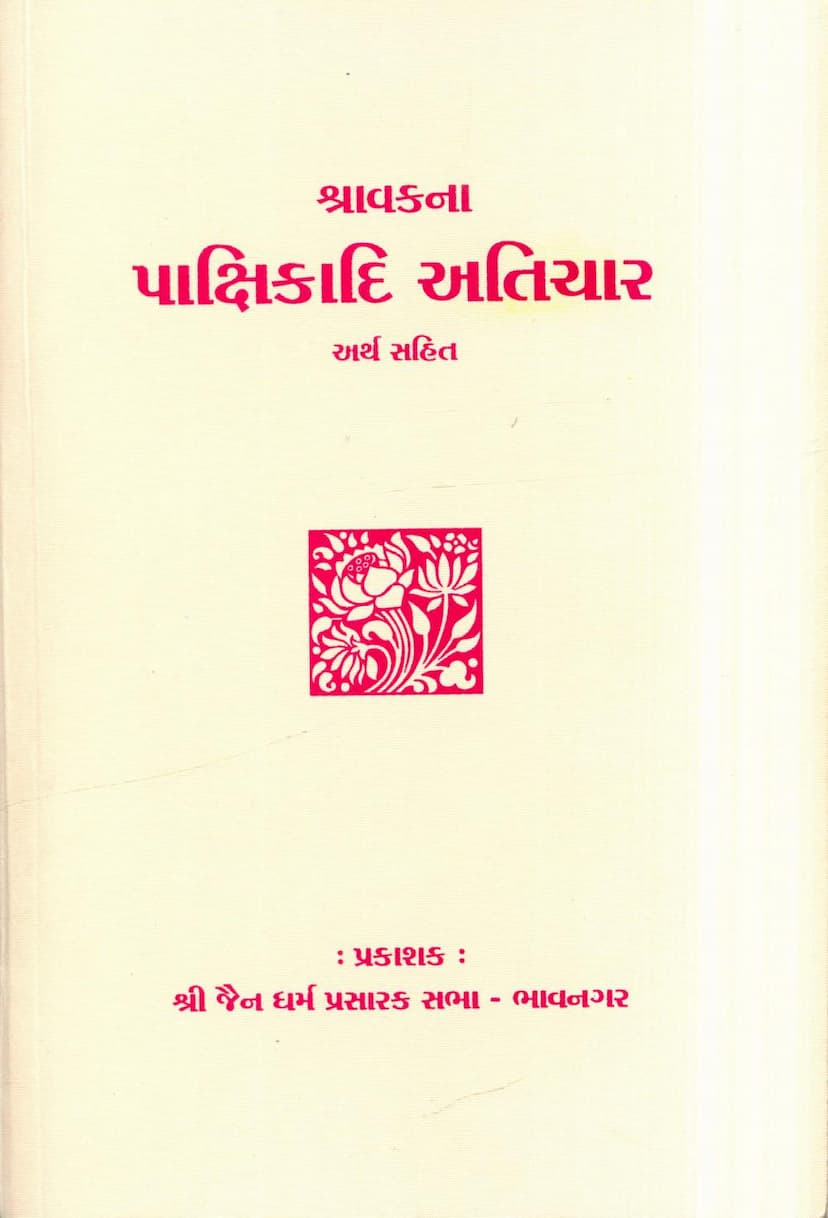
This document, titled "Shravakna Pakshikadi Atichar" (The transgressions related to Pakshik and other observances for a Shravak/lay follower), compiled by Sha. Kunvarji Anandji and published by Shri Jain Dharm Prasaraka Sabha, Bhavnagar, is a comprehensive guide to the transgressions (Atichar) that a Jain layperson (Shravak) might commit in their religious practice.
The book aims to explain the meanings of these transgressions, which are recited during the Pratikraman (ritual of introspection and repentance) performed bi-monthly (Pakshik), quarterly (Chaupasi), or annually (Sanvatsarik).
Key aspects and structure of the book:
- Purpose: The author noticed that many Jain brothers were unaware of the precise meanings of the Atichars. The book was created through careful effort and consultation with experienced individuals to provide clarity and ensure consistent recitation and understanding of these religious faults.
- Scope: It covers transgressions related to the five categories of conduct (Panchachar):
- Gyanachar (Conduct related to Knowledge): Transgressions in acquiring and practicing right knowledge.
- Darshanachar (Conduct related to Faith/Right Vision): Transgressions related to maintaining the purity of Right Faith (Samyaktva).
- Charitrachar (Conduct related to Right Conduct): This section includes transgressions related to the eightfold framework of conduct for monks (five Samitis and three Guptis), and also specifically addresses the twelve vows of a Shravak.
- Tapachar (Conduct related to Austerities): Transgressions related to both external and internal austerities.
- Viryachar (Conduct related to Effort/Energy): Transgressions related to the proper application of mental, vocal, and physical energy.
- Structure: The book begins with an introduction explaining the necessity of understanding Atichars. It then systematically details the transgressions associated with:
- The five main categories of conduct.
- Transgressions related to Samyaktva (Right Faith).
- Transgressions related to the twelve vows of a Shravak (seven fundamental vows and five auxiliary vows).
- Transgressions related to Sanlekhana (the final ritual of preparing for death).
- Transgressions related to Austerities (both external and internal).
- Transgressions related to Viryachar.
- Finally, it concludes with a summary of all transgressions and advice for those who may not have taken all the vows.
- Special Inclusion for Women: The author notes that the transgressions related to the fourth vow (celibacy/chastity) were traditionally recited by Shravikas (laywomen) in the same way as Shravaks, which he found inappropriate. Therefore, he has created specific transgressions for women related to this vow, emphasizing their importance for the female section of the community.
- Language and Terminology: The book utilizes older Gujarati, sometimes mixed with Marwari influences. A significant effort has been made to explain the meanings of difficult words and phrases in contemporary Gujarati. A glossary (Parishishta) is provided at the end for clarification.
- Specifics on Vows and Transgressions:
- First Vow (Ahimsa - Non-violence): Discusses transgressions related to harming living beings, from causing severe injury and death to more subtle forms of violence against even single-celled organisms.
- Second Vow (Satya - Truthfulness): Details transgressions related to lying, including false accusations, revealing secrets, and deceitful dealings.
- Third Vow (Asteya - Non-stealing): Covers transgressions related to theft, fraud, and dishonest business practices.
- Fourth Vow (Brahmacharya - Chastity/Celibacy): Includes specific sections for both Shravaks and Shravikas, addressing transgressions related to sexual misconduct, inappropriate thoughts, and desires.
- Fifth Vow (Parigraha Pariman - Limitation of Possessions): Explains transgressions related to exceeding the self-imposed limits on wealth, property, and dependents.
- Sixth to Eighth Vows (Diksiyamana, Bhopegopbhogapariman, Anarthadand Viraman): These are considered Guna Vratas (auxiliary vows that enhance the primary vows). They address limitations on directions of travel, enjoyment of consumables, and avoidance of purposeless or harmful activities.
- Ninth to Twelfth Vows (Samayika, Deshavakashik, Paushadh, Atithisamvibhag): These are Shiksha Vratas (vows for self-discipline and training). They relate to observing periods of equanimity, limiting one's sphere of activity, observing fasts and specific disciplines, and practicing charity and hospitality towards the deserving.
- Sanlekhana: Transgressions related to the process of preparing for death, emphasizing the importance of maintaining pure thoughts and conduct even in the final moments.
- Tapa (Austerities): Transgressions related to the performance of external and internal austerities, highlighting the importance of proper intention and method.
- Virya (Energy/Effort): Transgressions related to the misuse or lack of proper application of mental, verbal, and physical energies in religious practices.
- Overall Summary: The book concludes by mentioning the total count of 124 main transgressions across all categories. It also stresses that even those who haven't fully observed all vows should introspect on the four general types of transgressions: doing what is forbidden, not doing what is commanded, disbelief in divine teachings, and speaking contrary to scripture.
The book serves as a vital resource for Jain laypeople to understand and repent for their religious lapses, thereby striving for spiritual progress and purification.