
Shakahar
Added to library: September 2, 2025
Summary
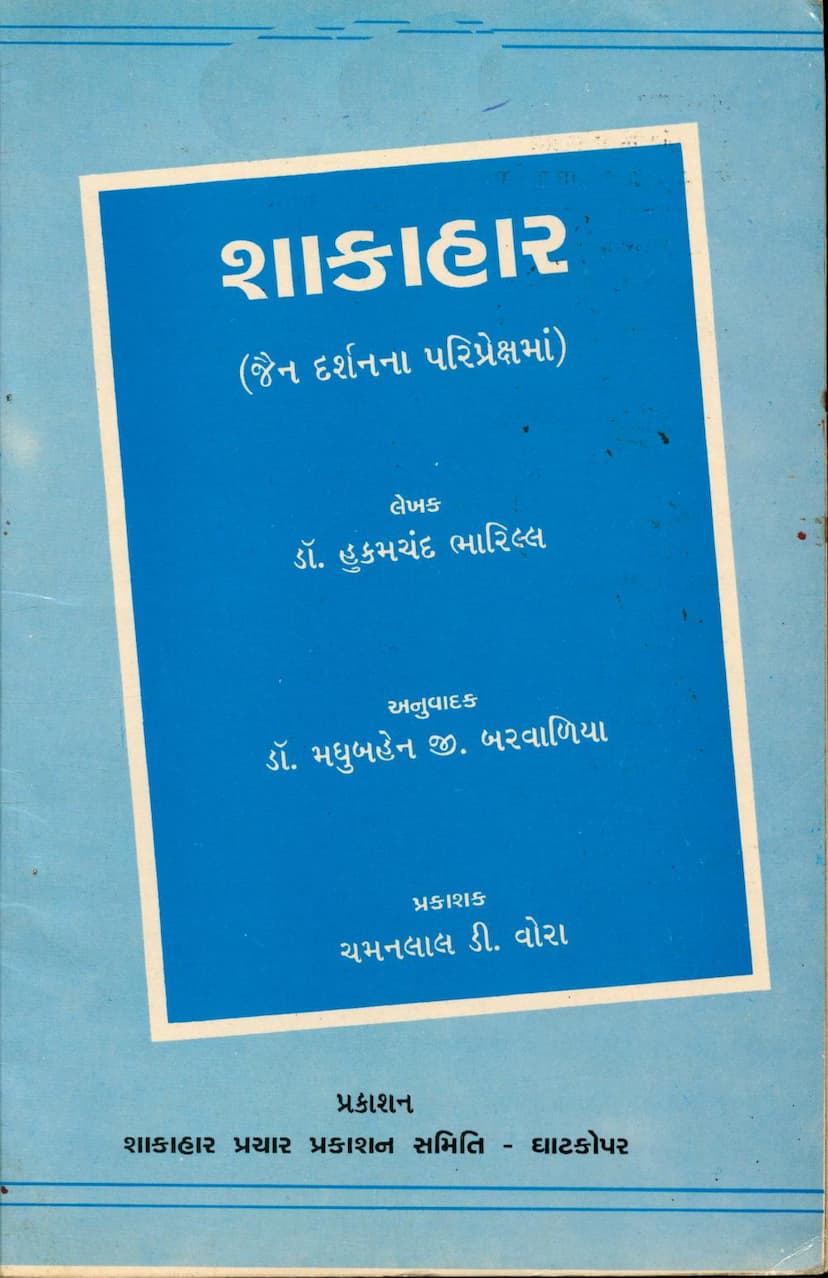
The book "Shakahar (Jain Darshan Na Pariprekshma)" by Dr. Hukamchand Bharill, translated by Dr. Madhuben G. Barvalia, and published by Chamanlal D. Vora, is a comprehensive exploration of vegetarianism from the perspective of Jain philosophy.
The book was published in 1992 during a period when the Jain community was actively promoting vegetarianism, declaring 1991 as the "Vegetarian Year." The publication of this Gujarati translation was a response to the overwhelming demand following the Hindi version's success.
Key Themes and Arguments Presented in the Book:
- Jain Philosophy and Vegetarianism: The core of the book lies in establishing vegetarianism as a fundamental tenet of Jainism, deeply rooted in the principle of Ahimsa (non-violence). It argues that the ultimate goal of Jainism is to attain a state of pure consciousness, free from karmic attachments, and that the path to this involves minimizing violence, starting with dietary choices.
- Ahimsa and Diet: The book strongly advocates that a vegetarian diet is an essential aspect of practicing Ahimsa. It asserts that harming living beings for food is a transgression of this principle.
- Biological and Evolutionary Perspective: Dr. S.D. Mehta's contribution highlights that human evolution is leaning towards vegetarianism, evidenced by the reduction in canine teeth, which were necessary for consuming animal flesh in primitive stages. He argues that moving away from vegetarianism is a step backward in social and cultural evolution.
- Nutritional Validity of Vegetarianism: The book addresses common arguments about protein intake, asserting that vegetarian sources like pulses and milk are sufficient for bodily needs. It also emphasizes that vegetarianism contributes to a calmer, more tolerant, and less aggressive disposition, contrasting it with the temperament often observed in carnivores.
- Shravakacharya and Dietary Rules: A significant portion of the book details the importance of Shravakacharya (the code of conduct for lay Jains) in relation to diet. It criticizes contemporary practices where celebrations involve late-night meals and the consumption of unwholesome and prohibited (Abhakshya) items like processed foods, stale sweets, and certain vegetables.
- Critique of "Abhakshya" Foods: The book clarifies that while the term "Shakahar" (vegetarianism) generally excludes meat, it's crucial within the Jain context to adhere to specific Abhakshya (prohibited) items according to Shravakacharya. This includes many root vegetables and certain other items that are not considered acceptable even within a vegetarian diet by Jain standards. The promotion of "Shakahar-Shravakacharya Year" aimed to address this nuance.
- Prohibition of Intoxicants: The book emphasizes that vegetarianism in the Jain context also extends to abstaining from intoxicants like alcohol (Madira) and other mind-altering substances. These are seen as harmful to well-being and conducive to violence.
- The Nature of "Abhakshya": The text categorizes prohibited foods into five types:
- Trasghat Mulak: Foods that cause violence to mobile beings (e.g., meat, fish).
- Bahughat Mulak: Foods that cause violence to numerous immobile beings (e.g., root vegetables, tubers).
- Nashakarak: Intoxicants (e.g., alcohol, drugs).
- Anupasevya: Unacceptable items (e.g., saliva, feces, urine).
- Anishta: Harmful for health (e.g., sugary items for diabetics).
- Distinction between Milk and Eggs: The book thoroughly debunks the notion of "vegetarian eggs." It clearly differentiates between milk, which is considered a byproduct of care and sustenance for the cow, and eggs, which are the direct product of a sentient being (hen) and contain the potential for life, thus classifying them as non-vegetarian. The argument is made that consuming eggs is akin to consuming the offspring.
- Scientific and Natural Basis of Jain Practices: The text highlights the scientific and natural basis of Jain practices like the prohibition of night-time meals (Ratri Bhojan Tyag) and the consumption of filtered water. It argues that these align with the natural rhythms of the body and the need for purity.
- Promoting a Holistic Vegetarianism: The book stresses the need for a balanced approach to promoting vegetarianism. It argues that simply highlighting the health benefits and cost-effectiveness of vegetarianism is insufficient. The ethical, moral, and non-violent aspects must also be emphasized.
- Modern Challenges and Solutions: It addresses the increasing reliance on processed and ready-to-eat foods, and the influence of Western culture. It also points out the presence of non-vegetarian ingredients and animal-derived products in seemingly vegetarian items, including beauty products. The call is for industries to provide genuinely vegetarian and cruelty-free alternatives at competitive prices and quality.
- Collective Responsibility: The book underscores that promoting vegetarianism and adhering to Shravakacharya is a collective societal effort, requiring the participation of industrialists, spiritual leaders, thinkers, doctors, and activists.
- Personal Commitment: Ultimately, the book urges individuals to adopt a pure vegetarian lifestyle, encourage their families to do so, and gently persuade others to follow suit. It concludes by stating that vegetarianism and adherence to Shravakacharya are not just desirable but essential for both worldly happiness and spiritual upliftment.
In essence, "Shakahar" serves as a strong appeal from the Jain perspective to embrace a pure, ethical, and compassionate lifestyle through vegetarianism, emphasizing its deep connection to spiritual growth and societal well-being.