
Sarva Rahasya Tantra
Added to library: September 2, 2025
Summary
Here is a comprehensive summary of the provided text, "The Sarvarahasyatantra" by Alex Wayman:
Overview of the Sarvarahasyatantra:
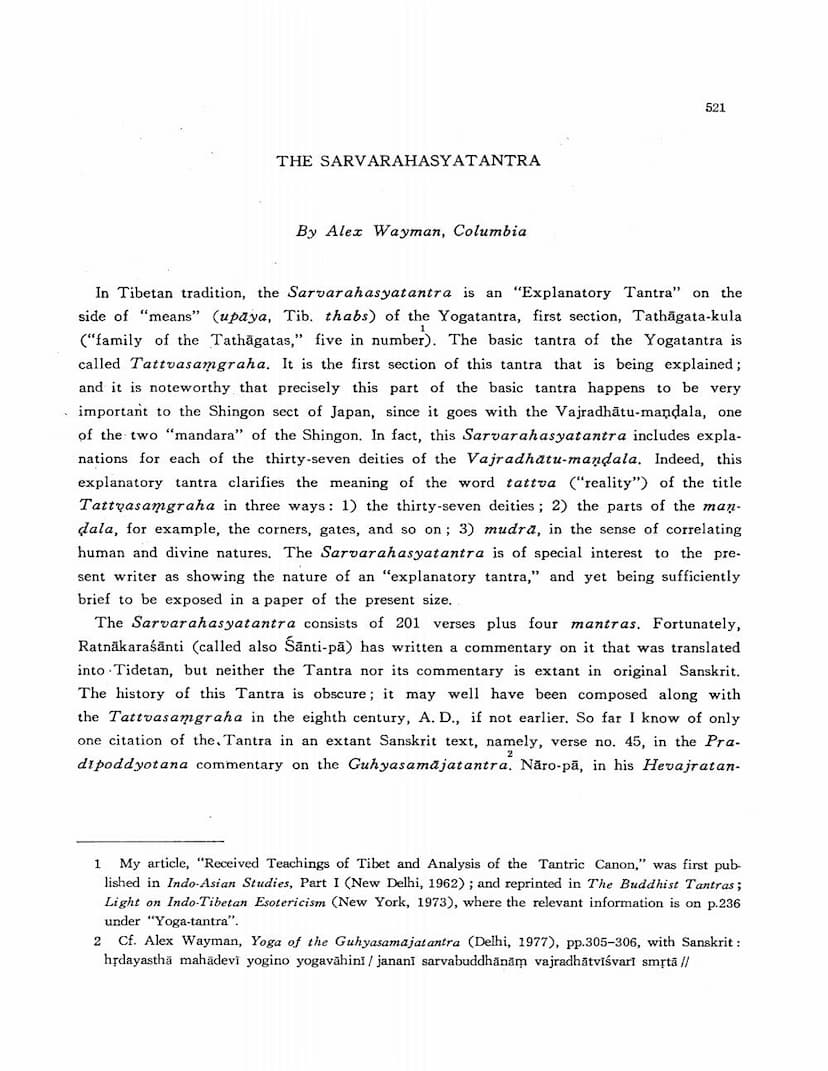
The Sarvarahasyatantra is an important "Explanatory Tantra" within the Yogatantra class of Buddhist tantras, specifically focusing on the "means" (upaya) side. It serves as a commentary and elaboration on the first section of the fundamental Yogatantra text, the Tattvasamgraha, which deals with the "family of the Tathāgatas." This particular section of the Tattvasamgraha is significant for the Shingon sect of Japan, as it directly relates to their Vajradhātu-mandala. The Sarvarahasyatantra provides explanations for each of the thirty-seven deities depicted in this mandala.
Key Contributions and Focus:
The Sarvarahasyatantra clarifies the meaning of "tattva" (reality) in the Tattvasamgraha's title in three ways:
- Deities of the Mandala: It details the thirty-seven deities of the Vajradhātu-mandala.
- Parts of the Mandala: It explains various components of the mandala, such as corners and gates.
- Mudras: It elaborates on the concept of mudras, emphasizing the correlation between human and divine natures.
The author, Alex Wayman, finds the Sarvarahasyatantra particularly valuable for illustrating the nature of an "explanatory tantra" while remaining concise enough for detailed study.
Structure and Content:
The Sarvarahasyatantra comprises 201 verses and four mantras. It is fortunate that a commentary by Ratnākaraśānti (also known as Śānti-pā) exists, which was translated into Tibetan. However, neither the original Sanskrit text of the Tantra nor its commentary is extant. The text's historical origins are unclear, but it may have been composed around the 8th century CE, possibly alongside the Tattvasamgraha. The article notes citations of the Sarvarahasyatantra in other Sanskrit texts, such as the Prajñāpādoddyotana commentary on the Guhyasamājatantra, and a significant number of verses cited by Nāro-pā in his Hevajratantra commentary.
The text is structured into 16 chapters, covering a wide range of topics:
- Chapters I-VIII: Primarily focus on the attainment of enlightenment through the Yogatantra path, including the nature of mind, wisdom, various stages of practice, and the understanding of "other dharmas" (other teachings).
- Chapters IV, VII, XIII, XV: Deal with the theory of mudra, emphasizing the connection between human and divine natures.
- Chapters IX, X, XII, XIV: Explore the concept of the mandala, specifically the Vajradhātu-mandala and mandalas in general within the Yogatantra.
- Chapter XI: Details sixteen symbolic hand gestures (mudras).
- Chapter XVI: Discusses the significance of secrecy and the meaning of the title Sarvarahasya ("all that is secret"), linking secrecy to the "means" aspect rather than "insight."
Key Themes and Concepts Elaborated:
- Mind: Described as like a wish-granting jewel, capable of leading to Buddhahood through contemplation.
- Wisdom: Differentiates between "non-two wisdom" and "reality wisdom," highlighting the importance of seeing things as they are.
- Mudras: Explained as correlating human and divine natures, with various types of mudras (Mahamudra, Samaya-mudra, Dharma-mudra, Karma-mudra) associated with different aspects of practice and symbolism.
- Mandala: Described in detail, including its structure, the symbolic representation of deities within it, and the practice associated with its contemplation.
- Deities: The text identifies and elaborates on the symbolism of various deities, including the Five Tathāgatas (Vairocana, Akṣobhya, Ratnasambhava, Amitābha, Amoghasiddhi) and numerous attendant Bodhisattvas and goddesses.
- Practice: Emphasizes the attainment of enlightenment through various stages of meditation, purification, and the practice of skillful means, often illustrated through the transformation of negative emotions.
- Secrecy: The importance of keeping tantric teachings secret is underscored, particularly concerning the "means" aspect of the practice.
Commentary and Translation:
The article references the Peking edition of the Tibetan translation of the Sarvarahasyatantra and its commentary by Śānti-pā. Wayman notes the detailed commentary provided by Śānti-pā, which often explains the significance of specific terms and practices. The provided text includes translations of selected verses from the Tantra with commentary.
In essence, the Sarvarahasyatantra is a foundational text for understanding the Yogatantra's path to enlightenment, its intricate mandala symbolism, and the profound application of mudras and contemplative practices, all conveyed through a rich system of deities and their symbolic meanings.