
JES 933 Ashta Prakari Puja 14 Or 16 Dreams And Shanti Kalash Rituals
Added to library: September 1, 2025
Summary
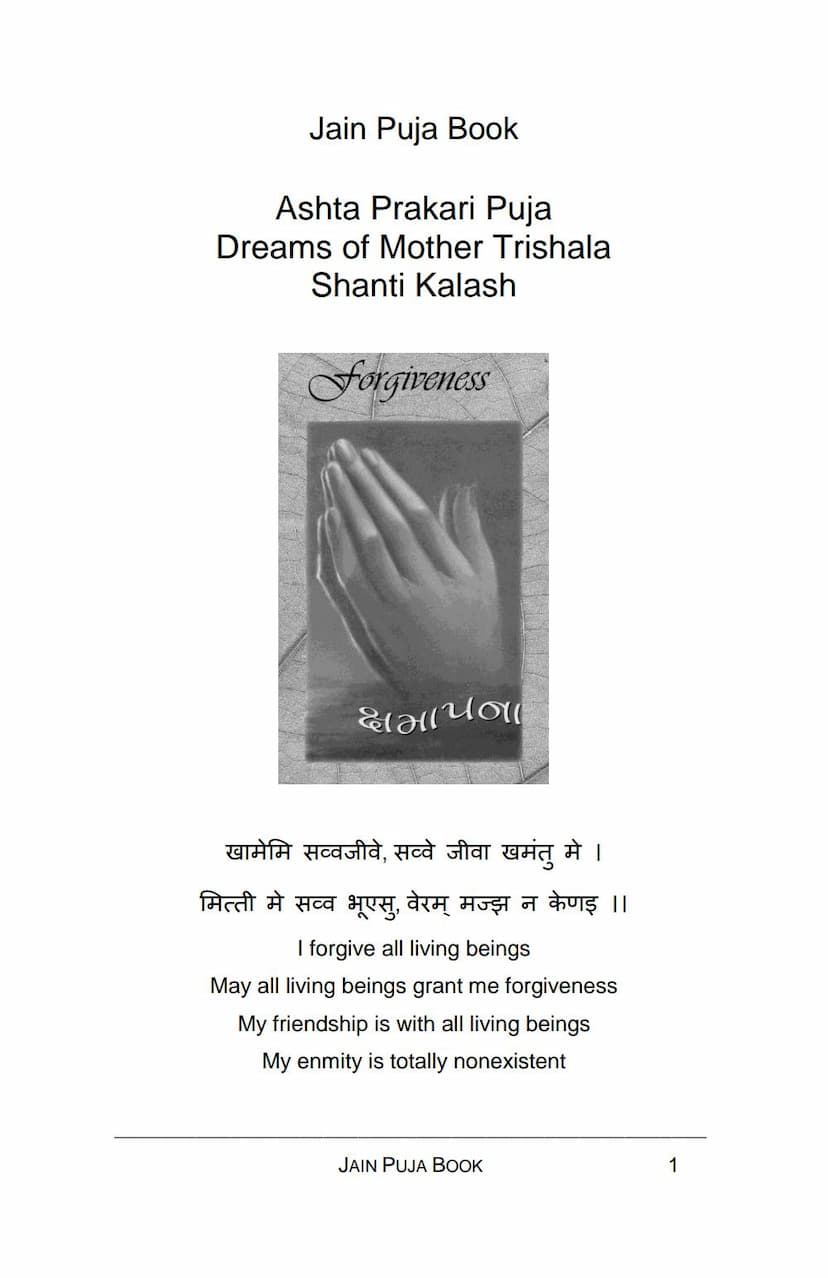
This Jain Puja Book, titled "Ashta Prakari Puja - 14 or 16 Dreams and Shanti Kalash Rituals" by the JAINA Education Committee, serves as a guide for performing Jain worship and understanding key rituals and concepts.
The book begins with Mangalacharan (Invocation), emphasizing universal forgiveness, friendship, and peace. It includes prayers such as the Namaskar Mangal Sutra, Chattari Mangalam (Four Auspiciousness), and reflections on universal friendship and the self-realized soul. The importance of Ahimsa (non-violence) and the virtues of compassion, peace, equanimity, forgiveness, truthfulness, renunciation, and non-attachment are highlighted.
The core of the book details the Ashta Prakari Puja (Eightfold Worship), a daily ritual performed by lay Jains. This worship involves offering eight different substances to the Tirthankara idols, each symbolizing the acquisition of virtues for spiritual progress. The eight types of worship are:
- Jal Puja (Water Worship): Symbolizes purity of soul and washing away karmas.
- Chandan Puja (Sandalwood Paste Worship): Represents tranquility and calmness of the soul, with specific points on the idol representing different virtues and aspirations.
- Pushpa Puja (Flower Worship): Symbolizes conduct that should be fragrant and beautiful to all beings, representing love and compassion.
- Dhoop Puja (Incense Stick Worship): Represents meditation, driving away false faith, and an ascetic life that benefits others.
- Deepak Puja (Lamp Worship): Symbolizes the light of knowledge, dispelling ignorance, and ultimately leading to liberation. This section also includes rituals for Chamar (whisking) and Darpan (mirror), considering Tirthankaras as spiritual kings.
- Akshat Puja (Rice Worship): Symbolizes the final birth and the aspiration for liberation in this lifetime, represented by unbroken rice grains.
- Naivedya Puja (Sweet Worship): Represents overcoming desires for worldly pleasures and attaining a state of spiritual satiety, free from the need for material sustenance.
- Fal Puja (Fruit Worship): Symbolizes the ultimate fruit of liberation (Moksha) and the aspiration to achieve it through virtuous living.
Following the Ashta Prakari Puja, the book presents the Dreams of Mother Trishala. It details the 14 or 16 auspicious dreams traditionally witnessed by the mother of a Tirthankara, with each dream symbolizing specific divine qualities and future achievements of the child. These dreams include a Lion, Elephant, Bull, Goddess Lakshmi, Garland, Full Moon, Bright Sun, Flag, Golden Vase, Lotus Lake, Ocean, Celestial Plane, Heap of Jewels, Smokeless Fire, Pair of Fish, and a Lofty Throne. These dreams collectively signify the child's power, righteousness, spiritual leadership, and eventual liberation.
The book concludes with the Shanti Kalash section, which includes prayers for peace and well-being. This includes the Namaskar Mangal Sutra, the Uvasagga-haram Stotra (a powerful mantra for removing obstacles), and the Brihacchanti (Great Peace Chant). These rituals are performed to invoke peace, prosperity, and the removal of all impediments for the individual, the community, and the entire universe.
The Arati and Mangal Divo section describes the ritual of waving a lighted lamp as a form of devotional worship, with specific verses for Lord Adinath and a general prayer for auspiciousness.
Throughout the book, the core message emphasizes the importance of devotion, virtuous conduct, and the pursuit of spiritual liberation, all rooted in the principles of Jainism, particularly non-violence (Ahimsa) and right faith, knowledge, and conduct. The rituals described are intended to aid lay followers in their spiritual journey.