
JES 921 Book Of Compassion Reverence For All Life Reference Book
Added to library: September 1, 2025
Summary
Here's a comprehensive summary of the Jain text "$JES 921 Book of Compassion Reverence For All Life Reference Book," based on the provided pages:
Overall Purpose and Theme:
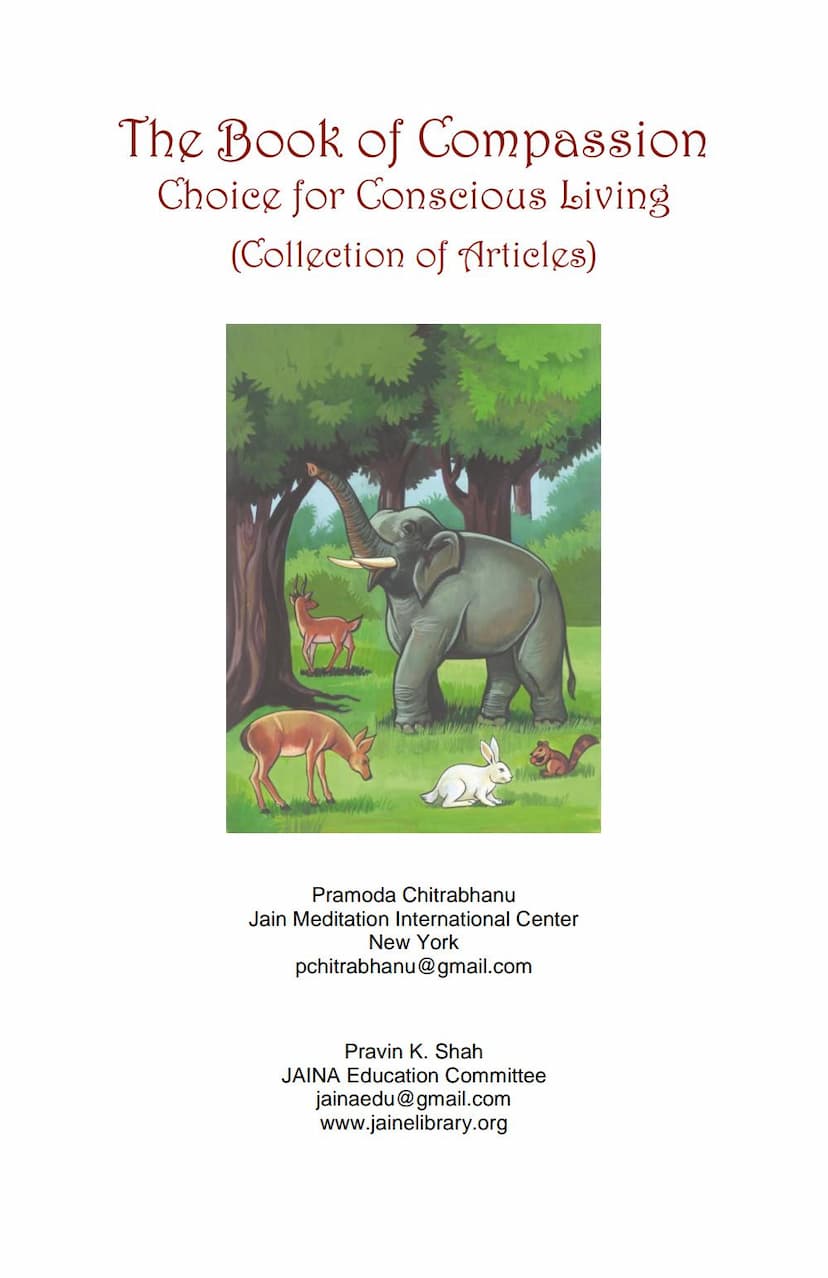
The book, "The Book of Compassion: Choice for Conscious Living," compiled by Pramoda Chitrabhanu and Pravin K. Shah, is a collection of articles that advocate for a life of non-violence (Ahimsa) and compassion towards all living beings. It aims to educate readers about the often-hidden cruelty involved in the production of various animal-derived products and encourages a shift towards a vegan lifestyle. The underlying philosophy is rooted in the Jain principle of Ahimsa as the highest duty, extending this principle to include the ethical treatment of animals.
Key Arguments and Content:
The book meticulously details various forms of animal exploitation across different industries, challenging common beliefs and traditions:
-
Dairy Industry Cruelty: A significant portion of the book (notably Chapter 1, "My Visit to a Dairy Farm," and Chapter 11, "The Myth about Milk") exposes the harsh realities of modern dairy farming. This includes:
- Forced Pregnancies: Cows are kept pregnant through artificial insemination throughout their productive lives to maximize milk yield.
- Calf Separation and Abuse: Male calves are deemed useless and are often sent to the veal industry where they are raised in confined, dark crates and slaughtered young. Female calves are separated from their mothers, denying them natural bonding.
- Shortened Lifespans and Slaughter: Dairy cows, after a few years of intense production, are slaughtered for low-grade meat when their milk yield declines, well before their natural lifespan.
- Health Impacts of Milk Consumption: The book argues that milk is not essential for human health and can contribute to health problems like osteoporosis, kidney issues, and even cancer, citing scientific studies. It also highlights the presence of hormones and antibiotics in milk.
- "Organic" Milk is Not Cruelty-Free: The book asserts that even organic dairy farms often engage in similar practices of forced impregnation and selling calves for slaughter.
-
Slaughterhouse Practices and By-product Utilization: Chapter 2, "Dairy Cows - Life, Usage, and Sufferings," and Chapter 3, "Recycling of Slaughterhouse Waste," delve into the comprehensive utilization of animal bodies:
- "We use everything but the squeal": The book illustrates how virtually every part of a slaughtered animal is used to create a vast array of products, from food items and pharmaceuticals to cosmetics, soaps, and even industrial materials.
- Rendering: The process of rendering dead animals, slaughterhouse waste, and even euthanized pets into animal feed is described, highlighting the potential for contamination with toxins and pharmaceuticals. This practice turns natural herbivores into unwitting carnivores.
-
Cruelty in Other Animal-Product Industries:
- Silk: Chapter 9, "Story of Silk," reveals that the production of silk involves boiling silkworms alive to obtain the filament for their cocoons, thus killing millions of lives for this luxury fabric.
- Pearls: Chapter 10, "Story of Pearls," explains that both natural and cultured pearls are formed as a response to irritation caused by foreign particles or introduced beads within oysters, leading to the oysters' suffering and eventual death.
- Eggs: Chapter 8, "Facts about Eggs," challenges the notion that eggs are vegetarian. It argues that even infertile eggs are part of a hen's reproductive cycle and that the conditions in poultry farms involve significant cruelty, including debeaking and feeding animals animal by-products.
-
Ethical and Environmental Imperatives:
- Reverence for Life: Chapter 6, "Vegetarianism - A Compassionate Approach to Life," emphasizes the Jain principle of "Reverence for Life" (Reverence for Life) and connects it to a vegetarian diet. It argues that consuming animal products carries negative energetic vibrations and contributes to violence.
- Environmental Impact: Chapter 14, "How our Diet Affects the Environment," highlights the significant environmental footprint of animal agriculture, including methane emissions contributing to global warming, high water consumption, land deforestation, and pollution.
- Reducing Violence: The book argues that adopting a vegetarian or vegan diet is a practical way to reduce violence, save animals, and contribute to a more sustainable planet.
-
Jain Religious Context:
- The book acknowledges the Jain tradition of non-violence but critiques the continued use of dairy products and other animal-derived materials in religious rituals. It argues that the intent of rituals should not be compromised by violent sourcing.
- It suggests alternatives for temple rituals, such as using water or plant-based milks instead of dairy.
-
Health Benefits of Veganism: The book promotes a vegan diet, presenting scientific evidence of its health benefits, including lower cholesterol, reduced risk of chronic diseases, and better overall well-being. Personal testimonies of improved health after adopting a vegan diet are included.
-
Alternatives and Resources: Chapters 12 ("Alternatives to Animal Abuse") and the appendices provide practical alternatives to animal products in food, clothing, toiletries, and household goods. They also list numerous websites and organizations dedicated to animal welfare and vegetarianism.
Overall Message:
"The Book of Compassion" is a powerful call to action for conscious living. It urges readers to move beyond tradition and sentimentality to understand the ethical implications of their choices. By exposing the pervasive cruelty in industries that supply animal products, the book aims to inspire a fundamental shift in consumption habits, promoting a compassionate, non-violent, and healthier lifestyle in alignment with Jain principles and the well-being of all life on Earth.