
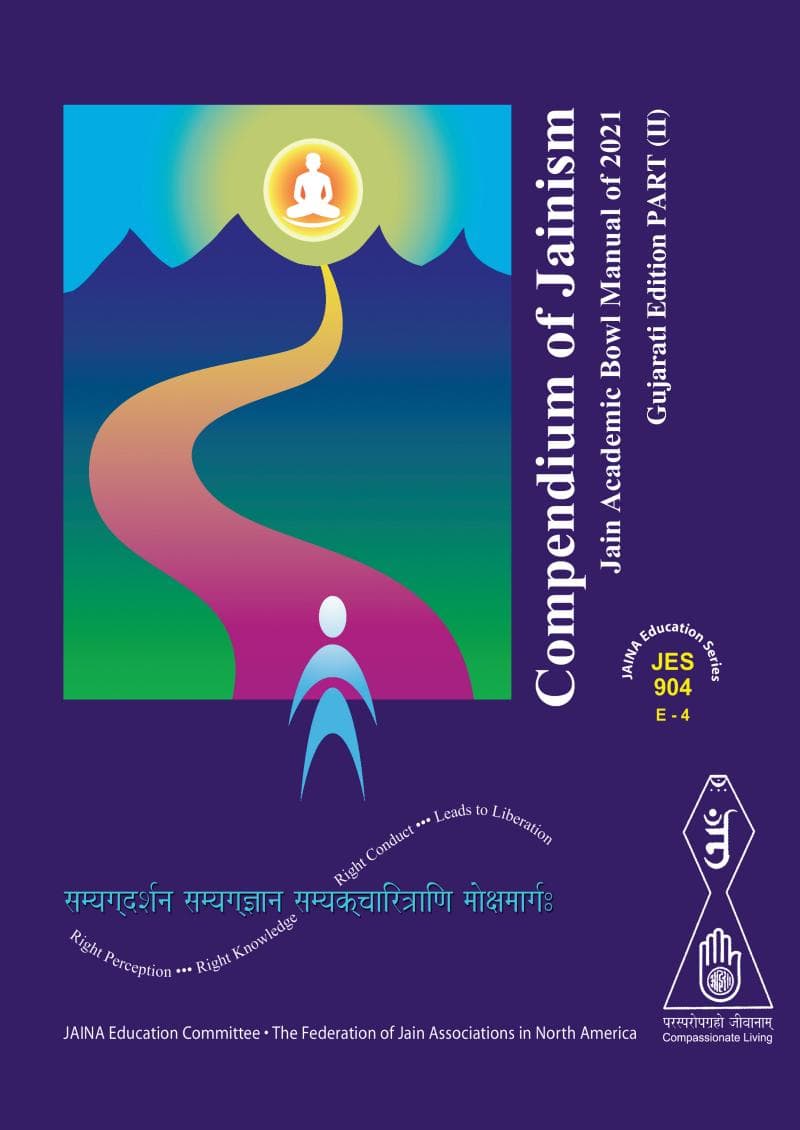
JES 904 Compendium Of Jainism Part 02 Gujarati (Translation Of Jain Academic Bowl Manual 4th Editio
Added to library: September 1, 2025
Summary
The document provided is the Gujarati translation of the "Jain Academic Bowl Manual 4th Edition, Part II" titled "$JES 904 Compendium of Jainism Part 02 Gujarati". It is published by JAINA India Foundation and compiled by the Jain Academic Bowl Committee and JAINA Education Committee.
Here's a comprehensive summary of the content, organized by section:
Overall Purpose and Structure: The book serves as a compendium of Jainism, specifically the second part of the Gujarati edition of the Jain Academic Bowl Manual (4th Edition, January 2021). It aims to provide a structured understanding of Jain principles, practices, history, literature, and significant figures, likely for educational or competitive purposes (as indicated by "Jain Academic Bowl"). The content is divided into major sections (D, E, F, G, H, I, J, K, L) covering various aspects of Jainism.
Key Sections and Content:
-
Section D: Religious Rituals (ધાર્મિક વિધિઓ)
- Jain Symbols (જૈન પ્રતીકો): This section details various Jain symbols and their meanings, including:
- "Jay Jinendra" (જય જિનેન્દ્ર) - greeting and its significance.
- "Michchhami Dukhadam" (મિચ્છામી દુક્કડમ) - asking for forgiveness.
- Jain Temples (જૈન મંદિર / જિનાલય / દેરાસર) - their purpose and atmosphere.
- Om (ૐ) - its representation of creation, preservation, destruction, and the Pancha-Parmeshthis.
- Hrim (હીમ) - a bija mantra representing the divine energy of the 24 Tirthankaras.
- Arham (અર્હમ) - representing the entire Sanskrit alphabet and the sound of the universe.
- Swastik (સ્વસ્તિક) - symbolizing the four modes of existence and the path to liberation.
- Tilak (તિલક) - its significance as a point of concentration and adherence to Tirthankara's teachings.
- Global Jain Symbol (વૈશ્વિક જૈન પ્રતીક) - a combination of symbols adopted during the 2500th Nirvana Mahotsav of Lord Mahavir.
- JAINA Logo (JAINA સંઘનું પ્રતીક) - the symbol adopted by the Federation of Jain Associations in North America.
- Aarti (આરતી) - the ritual of waving lamps, symbolizing the victory of light over darkness.
- Mangal Deep (મંગળ દીવો) - a single lamp symbolizing the illuminated face of the divine.
- Ashta Mangal (અષ્ટ મંગળ) - the eight auspicious symbols.
- Manastambha (માન-સ્તંભ) - a pillar of pride that signifies humility.
- Tirthankaras, Symbols, Dreams, Puja Rituals (તીર્થંકર, ચિન્હ, સ્વપ્ન, પૂજા વિધિ):
- Laanchan (લાંછન): Marks that distinguish Tirthankaras, often found at the base of their idols.
- Tirthankaras (તીર્થંકર): Their divine qualities and the concept of 24 Tirthankaras in each half-cycle.
- Tirthankara's Mother's Dreams (તીર્થંકરના માતાએ જોયેલા સ્વપ્ન): Detailed descriptions of the auspicious dreams seen by the mothers of Tirthankaras (14 for Shvetambaras, 16 for Digambaras), with specific examples for Lord Mahavir and Adinath.
- Ashta Prakari Puja / Ashta Dravya Puja (અષ્ટ પ્રકારી પૂજા / અષ્ટ દ્રવ્ય પૂજા): The eight-fold worship and the symbolic meaning of each offering (water, sandalwood, flowers, incense, lamp, unbroken rice, food offering, fruit) for both Shvetambara and Digambara traditions.
- Visiting Temples (મંદિરમાં જવું - શ્વેતાંબર અને દિગંબર પરંપરા): Discusses temple etiquette, attire, the concept of 'Nissahi' (leaving behind worldly attachments), behavior within the temple, and the general principles of idol worship. It also differentiates between Shvetambara and Digambara idol representations and decorations.
- Six Necessary Practices (છ આવશ્યક): Explains the six daily obligatory practices in Jainism, with specific details for both Shvetambara and Digambara traditions: Samayika (equanimity), Chaturvishth Stavan (praise of 24 Tirthankaras), Vandana (salutation to saints), Pratikraman (confession/repentance), Kayotsarga (standing meditation), and Pratyakhyana/Pachchakhan (vows/fasting).
- Festivals (પર્યુષણ અને દસ લક્ષણા પર્વ): Details the significance and observance of Paryushan (for Shvetambaras) and the Ten-Day festival of Das Lakshana (for Digambaras), emphasizing forgiveness, penance, and virtues.
- Jain Festivals and Celebrations (જૈન પર્વ અને ઉજવણી): Lists and explains various Jain festivals like Kalyanakas (auspicious events in Tirthankara's lives), Paryushan, Das Lakshana, Mahavir Janma Kalyanak (Mahavir Jayanti), Diwali (marking Lord Mahavir's Nirvana), Gyan Panchami (day of worshipping knowledge), Dev Diwali, Navpad Oli, Maun Gyaras, Posh Dasmi, Varshitap, Akshaya Tritiya, Phagun Sud Terash, Pancha Tithi, Choumashi Chaudas, and Mahamastakabhishek.
- Jain Temples and Pilgrimage Sites (જૈન મંદિરો અને યાત્રાધામો): Provides descriptions of important Jain pilgrimage sites in India, including Palitana, Shankheshwar, Taranga, Delvada (Mount Abu), Ranakpur, Shravanabelagola, Ayodhya, Hastinapur, Sametshikhar, and Pavapuri. It details their historical significance, artistic features, and the Tirthankaras associated with them.
- Yakshas and Yakshinis (યક્ષ અને યક્ષિણી): Explains the role of these semi-divine beings in Jainism as guardian deities of Tirthankaras and Jain shrines, and their symbolic meanings. It lists several prominent Yakshas and Yakshinis like Chakreshwari Devi, Ambika Devi, Padmavati Devi, Saraswati Devi, Lakshmi Devi, Manibhadra Dev, Ghantakarna Veer, Nakoda Bhairav, and Bhomiya Ji.
- Jain Symbols (જૈન પ્રતીકો): This section details various Jain symbols and their meanings, including:
-
Section E: Jain Sects, History, and Literature (જૈન સાહિત્ય અને સંપ્રદાયો)
- History of Jain Tradition and Sects (જૈન પરંપરા અને સંપ્રદાયોનો ઇતિહાસ): Covers the ancient origins of Jainism, pre-historic and historic evidence, the role of Kevalis, Shruta-kevalis, and Acharyas. It discusses the historical spread of Jainism in India and its contribution to Indian culture.
- Jain Scriptures and Literature (જૈન શાસ્ત્ર અને સાહિત્ય): Details the Jain Agamas (scriptures) and the classification of Agam literature. It discusses the Pūrvas, Anga-pravishṭa Agamas, Anga-bāhya Agamas, commentaries on Agamas, and literature accepted by the Digambara tradition. It also lists sacred books and the names of Jain Agam literature.
-
Section F: Stories of Tirthankaras (તીર્થંકરની વાર્તાઓ)
- Contains biographies and significant life events of Tirthankaras, including Lord Mahavir, Parshvanath, Neminath, Mallinath, and Adinath (Rsabhdev).
-
Section G: Stories of Ganadharas and Acharyas (ગણધર અને આચાર્યોની વાર્તા)
- Narrates the lives and contributions of important Ganadharas (chief disciples of Tirthankaras) like Gautam Swami and Sudharma Swami, and prominent Acharyas like Jambuswami, Sthulibhadra, Kundakunda, Haribhadrasuri, and Hemchandracharya.
-
Section H: Stories from Before Lord Mahavir's Time (ભગવાન મહાવીર પહેલાંની વાર્તાઓ)
- Includes narratives about Bharat and Bahubali, King Megharath, Sadhu Nandisena, King Shripal and Mayanasundari, Ilachikumar, and Sadhu Kurgadu.
-
Section I: Stories from Lord Mahavir's Life (ભગવાન મહાવીરના જીવનકાળના સમયની વાર્તાઓ)
- Features stories about Lord Mahavir's interactions with a cowherd, Chandakoushik the serpent, Chandanbala, the episode of nails in his ears, Meghakumar, Aimutta Muni, Ananda Shravak, Punia Shravak, Shalibhadra, King Shrenik and Queen Chellana, King Shrenik and Anathi Muni, and King Shrenik's fate.
-
Section J: Stories from After Lord Mahavir's Time (ભગવાન મહાવીર પછીની વાર્તાઓ)
- Includes stories about Vrajkumar, King Samprati, the Delvada Temples (Vimalshah, Vastupal and Tejpal), Minister Udayan and his sons Ambad and Bahad, and the generosity of Savachand and Somchand.
-
Section K: Contemporary Jain Personalities (સમકાલીન જૈન વિભૂતિઓ)
- Profiles of significant figures in more recent Jain history, including Shrimad Rajchandra, Virchand R. Gandhi, and prominent Acharyas from both Digambara and Shvetambara traditions like Kanji Swami.
-
Section L: Moral Stories (નૈતિક વાર્તાઓ)
- Presents moral tales like King Hans, Kamalsen, Vipul and Vijan, and Two Frogs, illustrating Jain ethical principles.
Key Themes and Concepts Highlighted:
- Ahimsa (અહિંસા): The principle of non-violence is central, emphasized in symbols, rituals, and stories.
- Compassion (પરસ્પરોપગ્રહો જીવાનામ્): The concept of mutual support among living beings is a guiding principle.
- Right Faith, Right Knowledge, Right Conduct (સમ્યક્ દર્શન, સમ્યક્ જ્ઞાન, સમ્યક ચારિત્ર): These are presented as the path to liberation.
- Spiritual Development: The compendium emphasizes practices like Samayika, Pratikraman, and meditation for inner purification and spiritual growth.
- Importance of Rituals and Symbols: Detailed explanations of the significance of various rituals, symbols, and temple practices highlight their role in conveying Jain philosophy.
- Tirthankaras: Their lives, teachings, and the concept of Kalyanakas (auspicious events) are a significant focus.
- Jain Philosophy and Ethics: Principles like Aparigraha (non-attachment), Anekantavada (non-absolutism), and the cardinal principles of Jainism (Ahimsa, Aparigraha, Anekantavada) are interwoven throughout the text.
- Historical Context: The text places Jainism within its historical context, referencing its ancient origins, its interactions with Vedic, Buddhist, and other traditions, and the historical development of its sects.
- Jain Literature: A significant portion is dedicated to explaining the vast Jain Agam literature, its classification, and its importance.
- Moral Guidance: Numerous stories are included to teach moral values and illustrate Jain principles in action.
Sponsorship and Acknowledgements: The Gujarati translation was sponsored by Amritlal Vakhatchand Mehta and Rukminiben Amritlal Mehta, with thanks to Dr. Dilipbhai Mehta and Diptiben Mehta and the Mehta family. Acknowledgements are given to the JAINA Education Committee, JAINA Academic Bowl Committee, Young Jains of America (YJA), Young Jain Professionals (YJP), and Päthashälä Teachers for their dedication.
In essence, this Gujarati compendium provides a comprehensive overview of Jainism, covering its theological foundations, rituals, historical evolution, philosophical underpinnings, and the lives of its key figures, presented in a way that is accessible and informative for a broad audience, particularly those involved in the Jain Academic Bowl.