
JES 105 Being A Jain 24 X 7 Journey Towards A Happy And Peaceful Life
Added to library: September 1, 2025
Summary
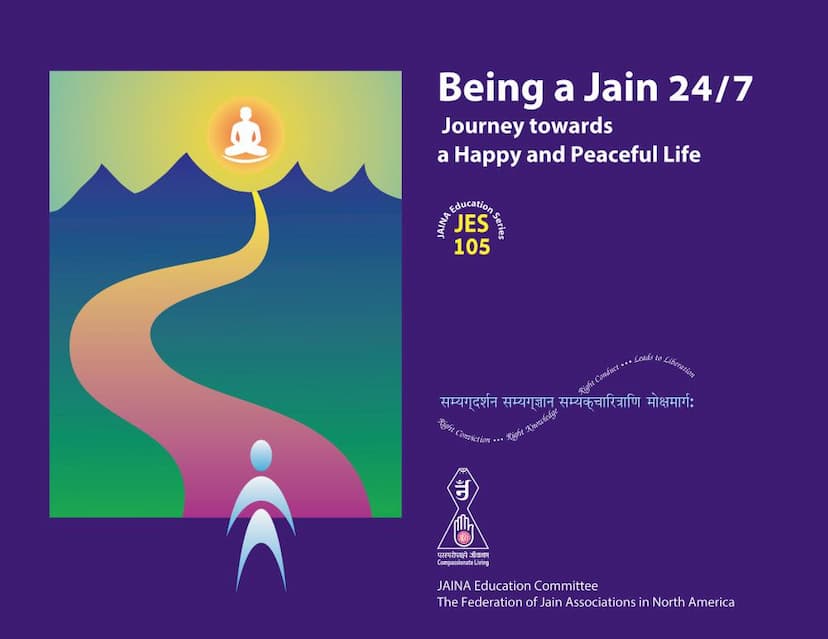
This document summarizes the Jain text "$JES 105 Being a Jain 24 X 7 Journey Towards A Happy and Peaceful Life" by Pratiksha Shah, published by the JAINA Education Committee.
The book is designed as a teaching guide to instill core Jain values in young children, aiming to help them lead happy, peaceful, and spiritually growth-oriented lives. The author, Pratiksha Shah, emphasizes the importance of teaching Jainism as an internal religion focused on self-improvement and peace, rather than a list of prohibitions.
Key themes and content covered include:
-
Core Jain Values: The book emphasizes Ahimsa (Non-Violence), Anekantavad (Non-Absolutism/Multiciplity of Viewpoints), and Aparigraha (Non-Possessiveness/Non-Attachment) as foundational principles.
- Ahimsa: Defined as not hurting oneself or others through thoughts, words, or actions, extending compassion to all living beings. It highlights positive actions like forgiveness, kindness, and helping others.
- Anekantavad: Teaches understanding others' perspectives and respecting different viewpoints, recognizing that truth can have multiple facets.
- Aparigraha: Focuses on letting go of possessions, comparisons, competition, negative emotions, and waste, promoting contentment and non-attachment.
-
The Soul (Atma): The book explains that the soul is one's true self, naturally pure, peaceful, happy, loving, and powerful. Karma obstructs these qualities, and the goal of Jainism is to realize the soul's true nature.
-
Karma: The text details the concept of karma as subtle particles attached to the soul due to thoughts, words, and actions. It stresses that individuals are masters of their destiny and can choose good thoughts, words, and actions to create positive karma. The book also touches on the karmic cycle (Asrava/Bandha, Samvar, Nirjara) and the importance of accepting situations and choosing one's response.
-
Other Jain Principles:
- Satya (Truthfulness): Emphasizes speaking the truth, wisely and at the right time, noting that honesty builds trust and frees the soul.
- Asteya (Non-Stealing): Encourages letting go of greed and desires to avoid taking what does not belong to us, promoting contentment and sharing.
- Forgiveness: Highlights the importance of forgiving oneself and others, recognizing that hurt often stems from past karma. It stresses responding to difficult situations with action but without anger or negativity.
- Leshya (State of Mind): Explains that one's state of mind influences karma and encourages striving for positive Leshyas (white, yellow, red) characterized by kindness, compassion, and nobility.
- The Five Senses (Indriyas): Introduces the concept of souls having different numbers of senses and the Jain commitment to minimizing violence by following the path of minimum violence.
- The Three Jewels of Jainism: Samyak Darshan (Right Faith), Samyak Gyan (Right Knowledge), and Samyak Charitra (Right Conduct) are presented as the path to liberation.
-
Sutras: The book provides explanations and meanings for several key Jain prayers and verses:
- Namaskar Sutra: The fundamental prayer, bowing to Arihantas, Siddhas, Acharyas/Upadhyayas, and Sadhus/Sadhvis, acknowledging their virtues and seeking inspiration.
- Kshamavani Sutra: A prayer for universal forgiveness.
- Chattari Mangalam: A prayer recognizing Arihantas, Siddhas, Sadhus, and the Jain Dharma as the most auspicious.
- Panchindiya Sutra: Recites 36 attributes of a spiritual leader (Acharya).
- Ichchhami Khamasaman: A prayer recited when showing respect.
- Iriyavahiyam Sutra: A prayer seeking atonement for harm caused to living beings through movement.
- Tassa Uttari Sutra: A discipline to avoid future sins through meditation.
- Annattha Sutra: Lists minor violations that can occur during meditation.
-
Class Approach and Activities: The guide outlines a teaching methodology focused on creating a positive learning environment. It includes a suggested class agenda, emphasizing greetings, meditation, sharing experiences, learning values and sutras with meaning, and engaging activities. The book also includes activities and coloring pages designed to reinforce learning, such as the "Hand of Ahimsa" and "Anekantavad" activities.
-
Parental Involvement: The book is presented as a tool for parents and teachers to use in pathshalas (religious schools) and at home, encouraging regular discussion and practice of Jain values with children.
In essence, "$JES 105 Being a Jain 24 X 7 Journey Towards A Happy and Peaceful Life" is a comprehensive resource for educating young individuals about Jainism, focusing on practical application of its principles for a fulfilling and peaceful existence.