
Jainism Its Distinctive Features And Their Impact On Our Composite Culture
Added to library: September 2, 2025
Summary
Here's a comprehensive summary of the provided text from "Jainism: Its Distinctive Features and Their Impact on Our Composite Culture" by Prof. K.R. De Karnataki:
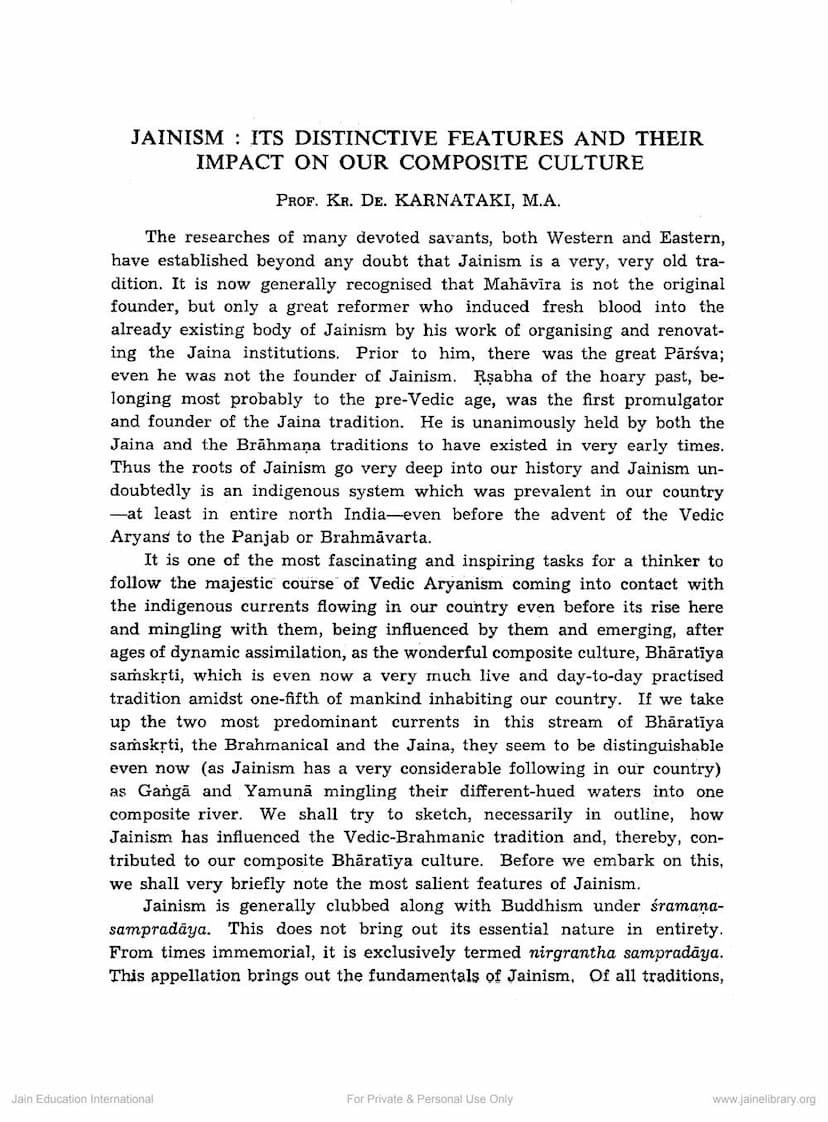
The book, "Jainism: Its Distinctive Features and Their Impact on Our Composite Culture," by Prof. K.R. De Karnataki, argues that Jainism is an ancient indigenous Indian tradition with profound and lasting influence on the development of Indian composite culture (Bharatiya Samskriti).
Key Distinctive Features of Jainism:
- Ancient Origins: Jainism is recognized as a very old tradition, predating the Vedic period. Mahavira is viewed as a great reformer, not the founder. The first promulgator was Rishabha, who likely belonged to the pre-Vedic era. This deep historical root makes Jainism an integral part of India's cultural fabric.
- Nirgrantha Sampradaya (The Unattached Tradition): While often grouped with Buddhism under the Shramana tradition, Jainism's core identity is as the "Nirgrantha Sampradaya," emphasizing detachment.
- Nivritti Attitude (Renunciation): A fundamental tenet of Jainism is the "nivritti" attitude towards life, viewing worldly existence as inherently regrettable and something to be brought to an end. This contrasts sharply with the "pravritti" (engagement) attitude of the Vedic-Brahmanic tradition, which sought worldly prosperity and longevity. Jainism's goal is cessation from the cycle of birth and death, not happiness in this or other worlds.
- Tapas (Austerity and Self-Control): Jainism places significant emphasis on "tapas" – rigorous mortification and control of the body as a means to spiritual progress. This includes practices like fasting (upavasatha), voluntary shedding of the body (sallekhana), and celibacy (brahmacarya). The text suggests the tradition of ascetic orders (yatis or tapasvis) may have originated within Jainism.
- Ahimsa (Non-Violence): Ahimsa is presented as the "sheet-anchor" of Jainism, integrated more scientifically, scrupulously, and thoroughly into its doctrine and practices than in any other tradition. This strict adherence to non-violence manifests in practices like strict vegetarianism and the injunction to eat before dusk.
- Ethical Code (Acara and Vicara): Jainism's ethical framework is a blend of conduct (acara) and reflection (vicara). Virtues like truthfulness (satya), non-violence (ahimsa), celibacy (brahmacarya), non-stealing (asteya), and non-possession (aparigraha) are central. The text highlights the Jaina emphasis on "tattva-chintana" (contemplation of truth) and the establishment of ascetic orders dedicated solely to this intellectual pursuit. This focus on reflection is credited with influencing the development of philosophical speculation and literature, particularly in Kannada, where the history of literature is often marked by a "Jaina-yuga."
- Support for Literature and Knowledge: Jain communities have a tradition of encouraging and supporting the production and dissemination of literature through grants, a practice stemming from their emphasis on "tattva-chintana."
Impact on Composite Indian Culture (Bharatiya Samskriti):
- Moderating the Pravritti Attitude: The Jaina "nivritti" (renunciatory) outlook helped temper the Vedic-Brahmanic "pravritti" (engagement) approach to life. The concept of Samsara, or the cycle of birth and death, as something to be escaped, is likely influenced by Jainism.
- Evolution of Nishkama Karma: The text suggests that the concept of "nishkama-karma" (action without attachment to results), as found in the Bhagavad Gita, may have evolved from the initial Vedic "pravritti" through stages influenced by Jainism's integration of renunciation with worldly engagement.
- Shifting from Animal Sacrifice to Vegetarianism: Jainism's unwavering commitment to Ahimsa significantly influenced the Vedic-Brahmanic practices of animal sacrifice and meat consumption. Over time, Jain influence led to widespread vegetarianism and the virtual abandonment of animal sacrifices, a major reform in Indian religious practices.
- Promoting Speculation and Philosophy: Jainism is credited with shifting the focus from ritualism to philosophical speculation ("atmavidya"). Figures associated with the Nirgrantha tradition are seen as instrumental in introducing Vedic adherents to deeper philosophical doctrines about the Self. The Jaina emphasis on "vicara" or "tattva-chintana" provided a crucial impetus for the development of speculative thought in India.
- Integration of Ethical Systems: The sophisticated and systematic ethical code of Jainism, encompassing both internal and external aspects, subtly permeated the Vedic-Brahmanic core, influencing subsequent ethical developments.
- Establishment of Ascetic Orders: The Jaina tradition of "sannyasis" or "yati-munis," leading rigorous, pure lives dedicated to spiritual contemplation, provided a model that was adopted and integrated into the broader Indian tradition. This order, with its elaborate rules and organization, influenced the development of monasticism and religious institutions in India.
In conclusion, the author argues that Jainism, with its ancient roots and distinctive features like renunciation, austerity, ahimsa, and intellectual contemplation, has played a vital and unchallengeable role in shaping the diverse and composite culture of India. Its influence is evident in the moderation of worldly engagement, the transformation of religious practices, the promotion of philosophical inquiry, and the establishment of ascetic traditions.