
Jain Marriage Ceremony
Added to library: September 2, 2025
Summary
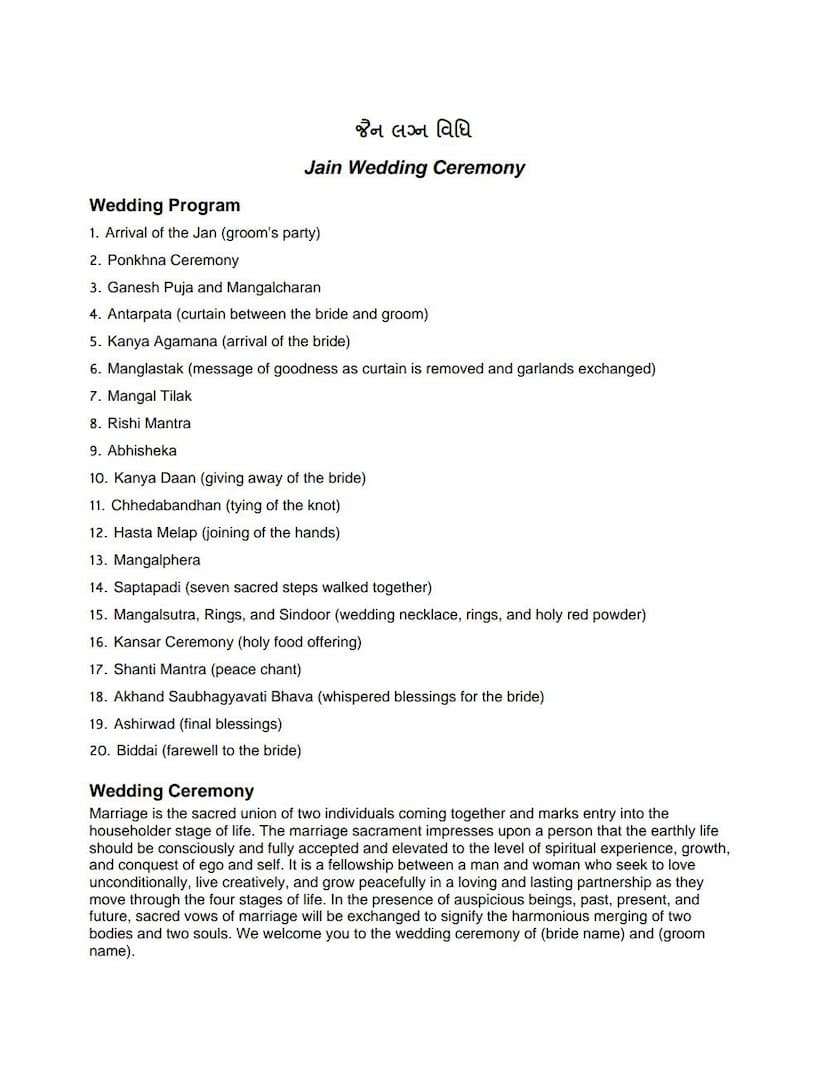
This document provides a detailed overview of the Jain Wedding Ceremony, outlining the program and explaining the significance of each ritual. The text emphasizes that marriage in Jainism is a sacred union that marks the entry into the householder stage of life, a period for spiritual growth, ego conquest, and living a creative and loving partnership. The ceremony is conducted in the presence of auspicious beings, with sacred vows exchanged to symbolize the merging of two bodies and souls.
The ceremony is broken down into the following key stages:
- Arrival of the Jan (Groom's Party): The groom and his entourage arrive and are welcomed. The Navkar Mantra, the most sacred Jain prayer invoking the five supreme beings, is recited to commence the proceedings.
- Ponkhna Ceremony: The bride's mother performs a welcoming ritual to dispel bad omens. The groom then crushes earthenware saucers, symbolizing his strength and readiness to overcome obstacles.
- Ganesh Puja and Mangalcharan: The ceremony begins with prayers to Lord Ganesh, the remover of obstacles, seeking blessings for a peaceful and successful occasion. The Navkar Mantra is recited again.
- Antarpata (Curtain between Bride and Groom): A curtain separates the bride and groom, symbolizing their current separateness, which will be overcome.
- Kanya Agamana (Arrival of the Bride): The bride enters the wedding mandap, usually escorted by her maternal uncle. The groom is asked to face her.
- Manglastak (Garland Exchange): As the curtain is removed, the bride and groom exchange garlands, signifying their acceptance and love for each other. Special prayers (Mangalashtaks) are recited to invoke divine blessings.
- Mangal Tilak: A sacred mark is applied to the foreheads of the bride, groom, and their parents. A Rakshapotli (sacred thread) is tied to their wrists for protection and well wishes.
- Rishi Mantra: The couple offers cloves while verses honoring enlightened souls are recited, symbolizing respect for spiritual figures.
- Abhisheka: The priest anoints the couple with holy water, symbolizing peace and happiness and binding them in an eternal union.
- Kanya Daan (Giving away of the Bride): The bride's parents symbolically give their daughter to the groom, who promises to cherish and respect her. A varmala (hand-woven cord) unites the couple. A formal invitation scroll detailing the marriage is read.
- Chhedabandhan (Tying of the Knot): The bride's sister ties a knot connecting the groom's scarf to the bride's sari, representing their eternal togetherness and the strength of their combined bond.
- Hasta Melap (Joining of the Hands): The couple joins hands, vowing to walk together throughout life, signifying their unity in body, mind, and spirit. This is considered a pivotal moment.
- Mangalphera: The couple walks around the sacred fire four times, representing the four stages of life (Brahmacharya, Gruhastha, Vänaprasthya, and Sanyasa). Each round is accompanied by prayers and offerings, symbolizing the pursuit of Dharma, Artha, Kama, and Moksha.
- Saptapadi (Seven Sacred Steps): The couple takes seven steps together, making vows with each step. This signifies a lifelong friendship and partnership. Puffed rice is offered by the bride's brother as a symbol of prosperity. The vows cover commitment, mutual support, shared life, spiritual growth, equality, and respect.
- Mangalsutra, Rings, and Sindoor: The groom applies sindoor to the bride's forehead and places a sacred necklace (Mangalsutra) around her neck, signifying his love and devotion. They also exchange wedding rings. Witnesses bless them by showering rice.
- Kansar Ceremony (Holy Food Offering): The bride's mother offers sweets, which the couple shares, symbolizing their nourishment of the relationship and the sweet life ahead.
- Shanti Mantra (Peace Chant): A peace chant is recited, and holy powder is sprinkled on the couple, bestowing blessings for universal peace and well-being.
- Akhand Saubhagyavati Bhava (Whispered Blessings): Female relatives whisper blessings into the bride's ear for a happy and prosperous married life.
- Ashirwad (Final Blessings): The priest and parents offer final blessings and shower the couple with rice and flowers.
- Biddai (Farewell to the Bride): An emotional farewell takes place as the bride leaves her parental home to begin her married life.
The document also includes various Sanskrit and Gujarati verses and mantras recited during the ceremony, many of which are from Jain scriptures or are generally considered auspicious in Indian traditions. The overarching theme is the solemnization of marriage as a spiritual journey and a partnership built on love, respect, and shared values within the framework of Jain philosophy.