
Jain Approach To Self Realization
Added to library: September 1, 2025
Summary
Here's a comprehensive summary of the Jain Approach to Self-Realization by Atmanandji Maharaj, based on the provided text:
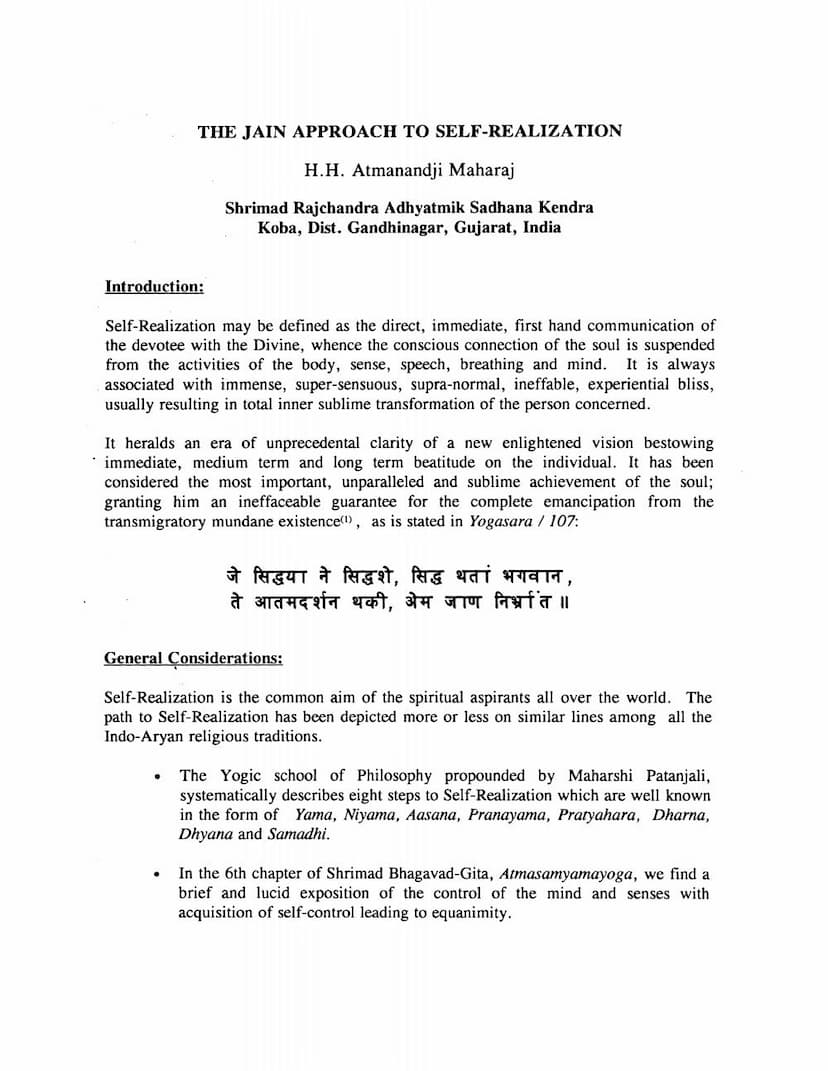
The Jain Approach to Self-Realization outlines the path to achieving spiritual enlightenment and union with the Divine, as understood within the Jain tradition. The book emphasizes that Self-Realization is the ultimate goal of spiritual aspirants worldwide, characterized by direct communion with the Divine, a transcendence of bodily and mental activities, and an experience of profound, ineffable bliss, leading to complete inner transformation and liberation from the cycle of birth and death.
The author notes that while different spiritual traditions may present similar paths to Self-Realization (citing examples from Yoga, Bhagavad-Gita, Upanishads, Buddhism, Christianity, and Sufism), the Jain approach uniquely synthesizes enlightened faith, enlightened knowledge, and enlightened conduct – often referred to as the "three jewels" – as the synergistic means to achieve inner purification and unlock inherent spiritual potential.
The book then details the four primary components of this path:
I. Satsanga (Holy Association): This involves intentional and beneficial association with holy saints, enlightened scholars, and virtuous individuals. The core idea is that one is influenced by the company they keep. Satsanga provides sublime inspiration, purifies the aspirant, and enhances their personality through the wisdom and pious conduct of the association. The text highlights the teachings of Shrimad Rajchandra, a spiritual guide to Mahatma Gandhi, and quotes Shankaracharya on the benefits of holy association, leading to detachment, freedom from delusion, a steady mind, and ultimately, liberation while living. Key practices for successful Satsanga include:
- Timeliness: Regular and increasing attendance, with periodic stays at pilgrimage centers or monasteries.
- Alertness: Approaching Satsanga with devotion, humility, and reverence, unreservedly following the teacher's instructions. Taking notes is encouraged.
- Patience and Perseverance: Overcoming initial lack of interest through gradual training.
- Priority: Subordinating worldly activities to make time for this association.
- Zealous Search: Actively seeking a truly enlightened preceptor, as guidance from such a master can lead to rapid spiritual progress. The text also includes other forms of holy association, such as idol-sight, prayer, worship, and the ritual of Pooja, as valuable and purifying daily practices.
II. Swadhyaya (Scriptural Studies): This emphasizes the acquisition of true knowledge about Godhood through the study of scriptures. Jainism places supreme importance on knowledge for both householders and ascetics. For householders, this involves listening to sermons and methodical individual study, often under a preceptor's guidance. Special focus is placed on understanding the seven fundamental Jain metaphysical principles (soul, matter, karma influx, bondage, stoppage, shedding, and liberation) and their practical application in discerning what to know, discard, and acquire. For ascetics, scriptural study is crucial for attaining omniscience. The text outlines five categories of scriptural study from the Tattvarthasutra: reading, questioning, reflection, recitation, and preaching, all aimed at enhancing spiritual learning, faith, dispassion, devotion, and benefit to others.
III. Virtuosity (Spiritual Growth): This is deemed essential for a sound spiritual life, acting as a foundation for advanced growth. It involves cultivating a high degree of virtue through a synergistic combination of negation (eradicating negative traits like anger, greed, ego) and affirmation (developing virtues like forgiveness, contentment, straightforwardness). The practice of dedicating specific periods to cultivating individual virtues and maintaining a spiritual diary to track progress and identify flaws is recommended. The Jain ethical code provides a detailed program for virtue promotion, including:
- Renouncing seven major addictions.
- Acquiring eight basic requisites (Mool Gunas), including small vows and vegetarianism.
- Adopting thirty-five virtues for righteous path followers.
- Observing twelve partial household vows to control sinful activities and sensory impulses.
- Following eleven stages of increasing renunciation for enlightened aspirants.
- Cultivating twenty-seven or twenty-eight fundamental virtues for ascetics. The development of virtuosity leads to a progression from information to knowledge, wisdom, and ultimately, Self-Realization, through proper discrimination and the acceptance of truth.
IV. Meditation: Meditation is considered a supreme instrument for attaining salvation in Jainism, holding the highest value among the twelve types of austerity. Lord Mahavira's extensive practice of advanced meditation is cited as an example of its power. Proper meditation leads to self-control and mental quietude, allowing concentration on the true nature of the Self, leading to equanimity and Self-Realization. Important considerations for meditation practice include:
- Place and Posture: Choosing conducive environments and steady, tension-free postures, including the Jain tradition's Kayotsarga (upright posture).
- Work and Food: Maintaining moderation in both, as excess can hinder progress.
- Regularity and Continuity: Consistent practice is vital to overcome challenges and maintain enthusiasm for mental serenity. Regular remembrance of the Divine, worshipful figures, and one's true Self is beneficial. Recitation of the Namaskara Mantra and an attitude of non-attachment are also recommended.
- Transcendental Meditation: This involves deep reflection on specific contemplations (transitoriness, helplessness, etc.) and cultivating four special attitudes: affection for all beings, joyful respect for the virtuous, compassion for the afflicted, and tolerance for the ill-behaved. Meditating on the divine virtues of worshipful personalities sharpens consciousness.
The book culminates by describing the Final Deep Dip, where the aspirant, having attained full worthiness, focuses intensely on their absolute Self, gradually discarding the non-Self (body, senses, mind). This absorption in the "Pure Knower" leads to ineffable bliss, supra-normal wisdom, and the destruction of delusion, culminating in Self-Realization and a state of Nirvikalpa Samadhi (undifferentiated absorption). If this state is sustained, it leads to the annihilation of subtlest soul defilements, omniscience, infinite bliss, and immortality.
In conclusion, the Jain approach to Self-Realization is presented as a holistic and synergistic path that requires a balanced combination of holy association, enlightened knowledge, advanced virtuosity, and true meditation, all leading to a steady, pure, and concentrated mind, resulting in equanimity and the ultimate spiritual achievement.