
Indo European Sodalities In Ancient India
Added to library: September 1, 2025
Summary
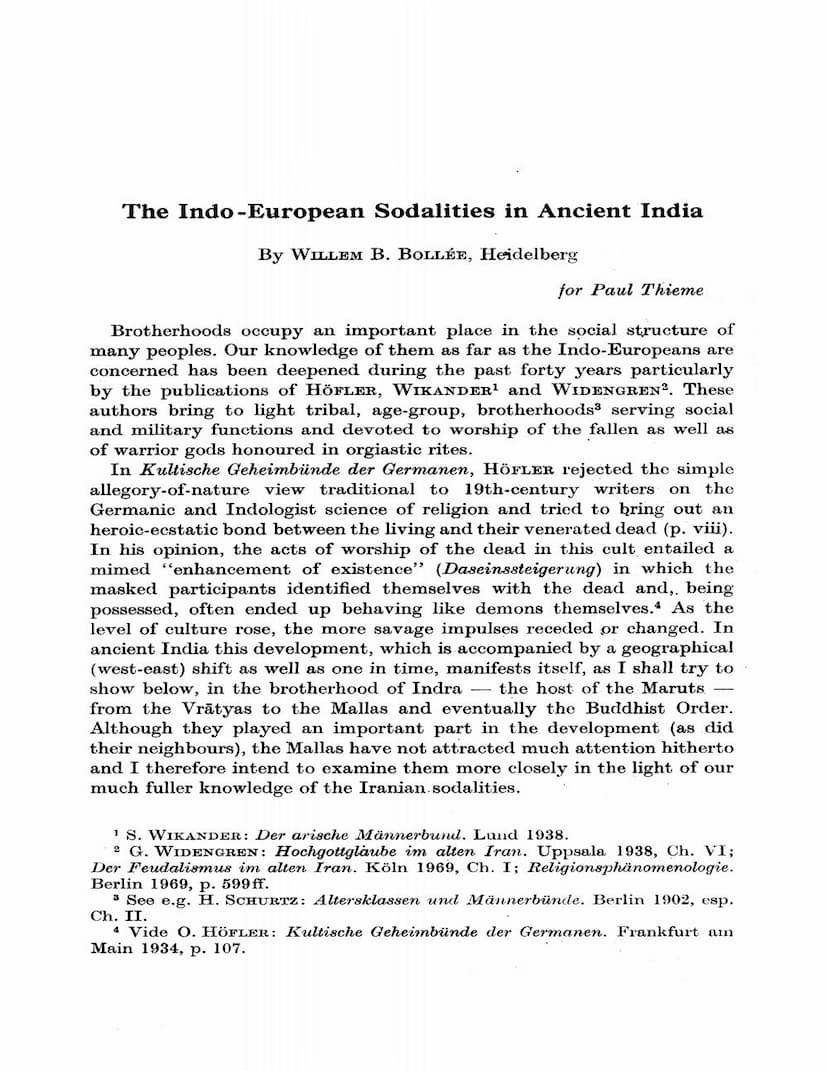
This document, "The Indo-European Sodalities in Ancient India" by Willem B. Bollée, explores the concept of brotherhoods or sodalities within the context of ancient Indo-European societies, with a particular focus on their manifestations and evolution in ancient India.
The author begins by acknowledging the significant contributions of scholars like Höfler, Wikander, and Widengren in understanding these brotherhoods across different cultures. These groups, characterized by their tribal, age-group, or religious affiliations, served social and military functions and were often involved in the worship of fallen heroes and warrior deities through orgiastic rites. Bollée highlights Höfler's interpretation that these cults involved a "mimed enhancement of existence" where participants identified with the dead, sometimes leading to demonic behavior.
Bollée argues that in ancient India, this development is traceable through a historical and geographical progression. He identifies the brotherhood of Indra and the Maruts as an early manifestation, evolving through the Vratyas, the Mallas, and eventually influencing the Buddhist Order. The Mallas, in particular, are singled out for closer examination due to their significant role and relative lack of scholarly attention.
The text draws parallels between Indian and Iranian sodalities, noting common characteristics such as members wearing black, blackened arms, and long hair, and the use of belts signifying allegiance. It suggests a propensity for violence and a heroic, dragon-slaying ethos in these groups, reflected in their deities and myths. Indra in Vedic literature is presented as fulfilling roles similar to the Iranian Mitra, acting as a divine hero and leader of the Maruts, who are seen as the celestial counterpart of earthly brotherhoods. The Vratyas are described as exhibiting wild and predatory characteristics, engaging in raids and possessing attributes that link them to these earlier brotherhoods. Their sacrifices, like the Vratyastomas, are interpreted not just as conversions to Brahmanism but as solemn vows and magical invigorations.
Bollée connects these Indian groups to European sodalities like Wodan's Furious Host, noting the survival of similar customs in modern festivals. He also explores the Mallas as a significant group, tracing their origins and connections to the Vratyas. The text delves into the Mallas' association with wrestling and their potential etymological links to the word "malla."
The paper further examines the influence of these brotherhoods on religious orders, particularly Buddhism and Jainism. It highlights similarities in their organizational structures, rituals, and the concept of "congenites" (those born at the same time) as a mark of close bonds and mutual support. The author draws parallels between the exclusivity and initiation practices of ancient brotherhoods and those found in early Buddhist monastic communities.
In conclusion, Bollée posits that the Indo-European sodality system left a lasting imprint on ancient Indian society, influencing various social and religious groups, including the Vratyas, Mallas, and ultimately the development of Buddhist monasticism. He emphasizes the Eastern provinces, particularly Magadha, as a region where these traditions persisted and evolved, possibly due to earlier waves of invaders settling there before the full assimilation of Vedic culture.