
Gyandhara 03
Added to library: September 1, 2025
Summary
Here's a comprehensive summary of the Jain text "Gyandhara 03" based on the provided pages:
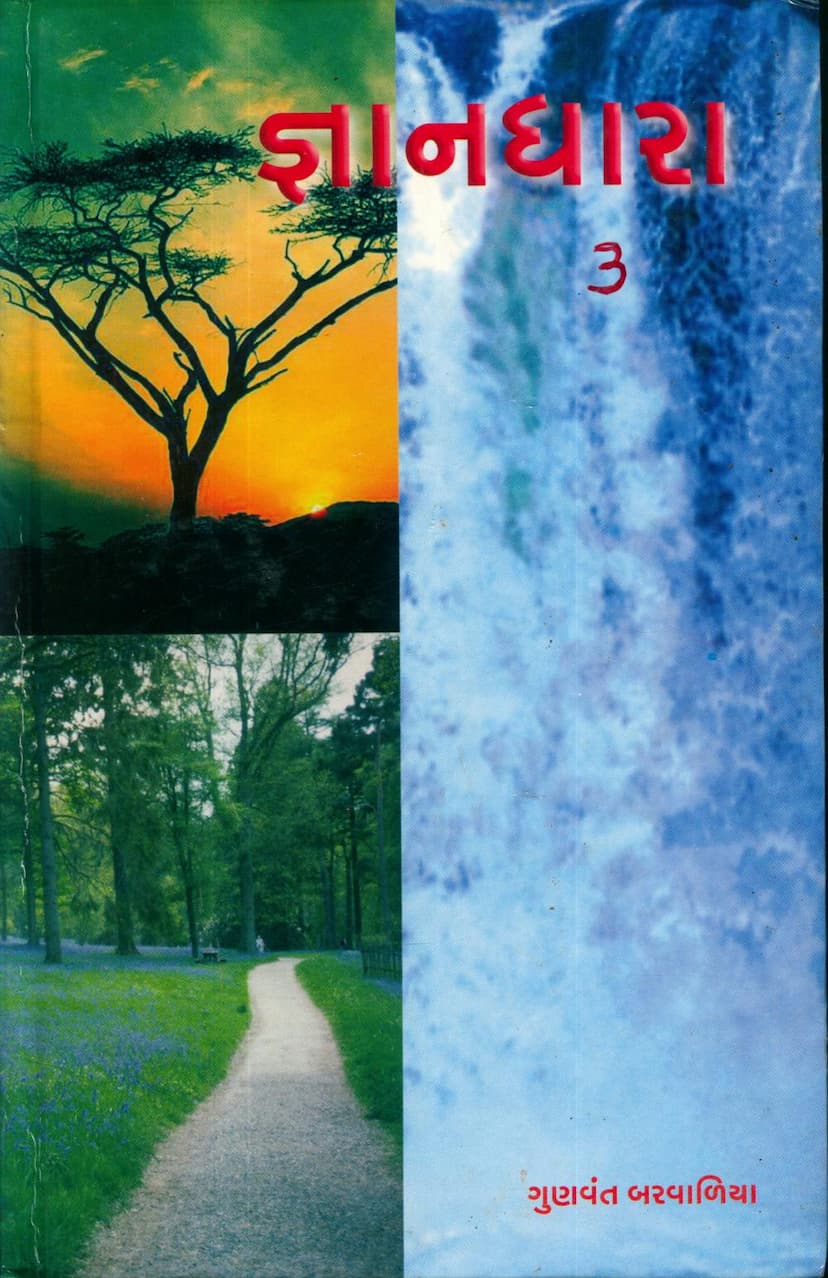
Book Title: Gyandhara 03 Author: Gunvant Barvalia Publisher: Saurashtra Kesari Pranguru Jain Philosophical and Literary Research Centre Catalog Link: https://jainqq.org/explore/032451/1
Overview:
"Gyandhara 03" is a collection of essays and research papers presented at the "Third Gyan Satra" (Knowledge Symposium) organized by the Saurashtra Kesari Pranguru Jain Philosophical and Literary Research Centre, in collaboration with the Uvasaggaharam Sadhana Trust. The symposium took place on December 3-4, 2005, in Mumbai. The book aims to disseminate profound knowledge and research on various aspects of Jain philosophy, literature, and its global impact, featuring contributions from 61 scholars.
Key Themes and Contents:
The book is a compilation of diverse scholarly works, primarily focusing on Jain philosophy, the teachings of spiritual leaders, and the propagation of Jainism. Based on the provided pages, the following themes and specific topics are covered:
-
The Letters of Shrimad Rajchandraji: A significant portion of the book is dedicated to analyzing the letters of Shrimad Rajchandraji, a prominent Jain mystic and spiritual leader. Several papers explore the "flow of consciousness" and "inner consciousness" as expressed in his letters. These essays delve into his profound spiritual insights, his emphasis on detachment, the importance of self-realization, the role of devotion, the concept of equanimity, and the impact of his spiritual guidance. His correspondence with various individuals, including Bhagwan Mahavir's philosophy and his own inner turmoil, are discussed. The papers highlight his unwavering faith, his deep compassion, and his aspiration for all beings to attain liberation.
-
Yogi Anandghanji's Compositions (Padas): Several scholars analyze the spiritual compositions (padas) of Yogi Anandghanji. These papers explore the process of self-realization, the metaphorical language used to describe spiritual journeys, the interplay between pure consciousness (Sumati) and impure consciousness (Kumati), the significance of detachment, and the ultimate experience of bliss. Anandghanji's works are praised for their aesthetic beauty, profound spiritual depth, and evocative descriptions of spiritual states. His use of metaphors like the "cup of wine" and the "tree of consciousness" is examined to understand the path to liberation.
-
Samkit (Right Faith): The concept of Samkit, a fundamental principle in Jainism, is explored. Papers discuss its definition, its importance as the foundation for understanding Jain philosophy and practice, and the six essential beliefs (sthanaks) that constitute true Samkit. The role of virtuous conduct, the understanding of soul and karma, and the path to salvation are linked to the attainment of Samkit.
-
The Spread of Jainism Internationally: Several essays document the global expansion of Jainism. They highlight the migration of Jain communities to countries in Africa, Asia, Europe, and North America. The papers detail the establishment of Jain centers, temples, and educational institutions, the preservation of Jain traditions and values by diaspora communities, and the efforts to educate younger generations about Jainism in their respective countries. The use of modern educational tools and the adaptation of teaching methods to suit international audiences are also discussed.
-
Jain Philosophy and Science: Some papers attempt to draw parallels between Jain philosophical concepts and modern scientific principles. Topics like the nature of the universe, the concept of atoms (pudgal), the interconnectedness of elements, and the principles of karma are discussed in relation to scientific theories. The papers suggest that ancient Jain texts might contain profound insights that resonate with contemporary scientific understanding, particularly in areas like the interconnectedness of all living beings and the principle of cause and effect.
-
The Importance of Dravyanuyoga: The significance of Dravyanuyoga, one of the four major classifications of Jain literature, is emphasized. Specifically, the "Prajnapana Sutra" is discussed in detail, highlighting its comprehensive analysis of soul (Jiva) and non-soul (Ajava) substances, their attributes, and their interactions. The complexity and depth of this scriptural text are acknowledged, along with its potential to connect with modern scientific inquiry.
-
The Role of Karma in Worldly Affairs: The concept of Karma, central to Jain philosophy, is explored as a universal law of cause and effect that governs not only individual lives but also societal and cosmic order. The papers discuss how karma influences worldly events, the inevitability of reaping what one sows, and the possibility of mitigating karmic consequences through spiritual practices like penance and seeking forgiveness. The text also touches upon the nuanced understanding of karma as both a cause and an effect, and how actions create forces that shape destiny.
-
Ethical Principles and Education: The need for religious and ethical education for children and youth is stressed. The importance of parental guidance, the role of spiritual teachers (Gurus), and the proactive engagement of younger generations in preserving and propagating Jain values are discussed. The papers advocate for modernizing teaching methods, using engaging content, and fostering a deeper understanding of Jain principles like Ahimsa, Anekantavada, and Aparigraha.
Publisher and Research Center:
The book is published by the Saurashtra Kesari Pranguru Jain Philosophical and Literary Research Centre, which is dedicated to studying, researching, editing, and publishing Jain philosophy, literature, and culture. The center aims to present Jain principles scientifically, preserve ancient manuscripts, promote human welfare through Jain values, and support students and scholars in Jain studies.
Overall Significance:
"Gyandhara 03" serves as a valuable resource for understanding the multifaceted nature of Jainism. It showcases the depth of Jain philosophical thought, the spiritual legacy of its great leaders, and the enduring relevance of its ethical principles in the modern world. The collection highlights the dynamic efforts to spread Jain teachings globally and to connect ancient wisdom with contemporary understanding.