
Glimpses Of Jainism And Biography Of Forgotten Hero Virchand Raghavji Gandhi
Added to library: September 1, 2025
Summary
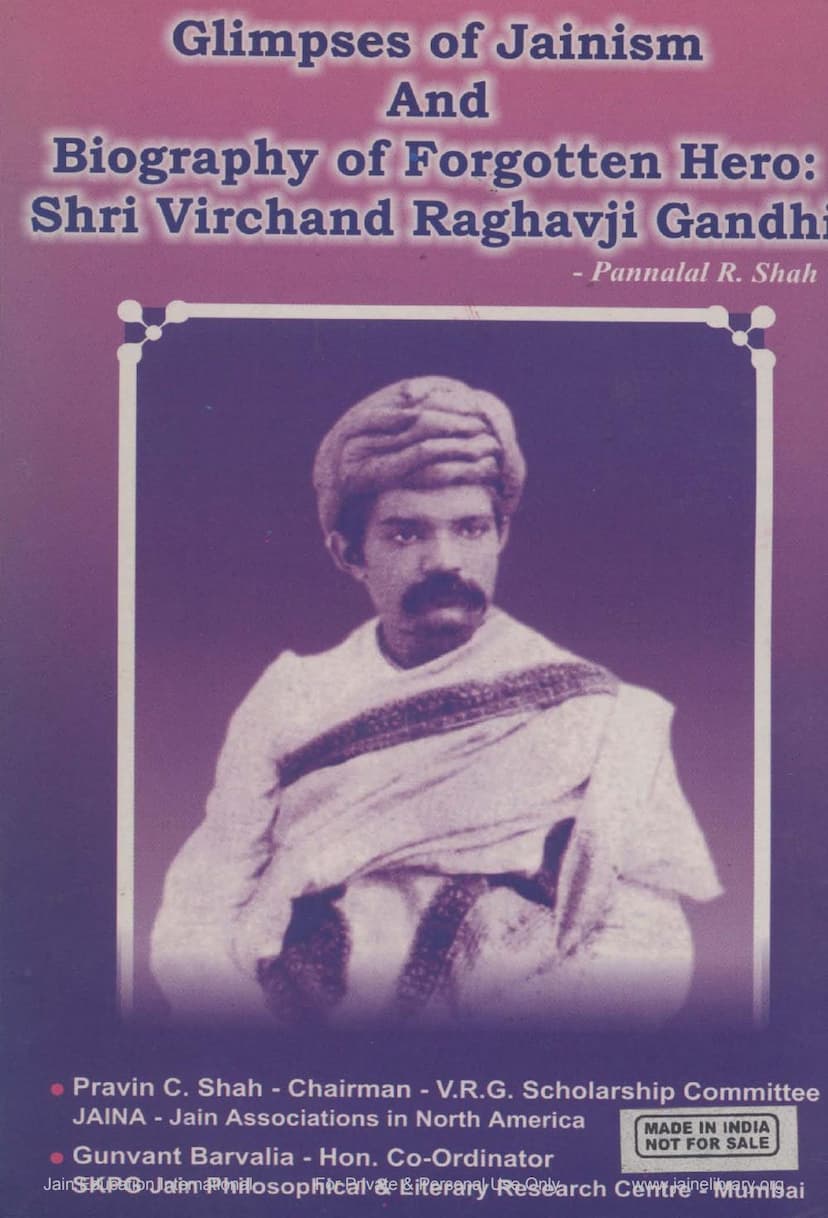
This book, "Glimpses of Jainism and Biography of Forgotten Hero Virchand Raghavji Gandhi," by Pannalal R. Shah, Gunvant Barvalia, and Kurangi Desai, published by JAINA (Jain Associations in North America) and the Shri Virchand Raghavji Gandhi Scholarship Committee, serves as a tribute to Virchand Raghavji Gandhi and an introduction to Jainism.
Glimpses of Jainism:
The book provides a comprehensive overview of Jainism, covering its:
- Ancient Origins: Jainism is presented as an ancient religion passed down through Tirthankaras, with Rishabhdev being the first and Mahavir the 24th and last.
- Core Philosophy: Key tenets like Ahimsa (non-violence) as the supreme religion, the concept of God as an omniscient observer rather than a creator, the theory of Karma and reincarnation, and Anekantvada (the principle of multiple viewpoints) are explained.
- Code of Conduct: The five vows (Ahimsa, Satya, Asteya, Brahmacharya, Aparigraha) for ascetics (Maha-vrata) and lay followers (Anu-vrata) are detailed.
- Religious Practices: The significance of the Navkar Mantra and daily essential practices (Aavashyak) are highlighted.
- Sacred Texts and Symbols: The compilation of Agamas, the meaning of the Jain religious symbol (Pratik), and the Swastik are discussed.
- Traditions: The two main traditions, Digamber and Shwetamber, are briefly mentioned.
- Festivals and Observances: Key festivals like Mahavir's birthday, Diwali, Paryusan, and Daslaxana are noted.
- Temples and Pilgrimage: The architectural magnificence of Jain temples and important pilgrimage sites (Tirths) are described.
- Jain Diet: The emphasis on strict vegetarianism, avoidance of certain foods, and the principles behind these practices are explained, along with their medical benefits.
Biography of Virchand Raghavji Gandhi:
The book then delves into the life of Virchand Raghavji Gandhi, portraying him as a pivotal figure in introducing Jainism to the West and a forgotten hero.
- Early Life and Education: Born in Mahuva, Gujarat, Gandhi displayed an early thirst for knowledge. He moved to Bhavnagar and then Bombay for higher education, becoming the first Jain graduate in 1884.
- Public Activism: Gandhi became actively involved in community affairs, serving as the secretary of the Jain Association of India, working on social and religious reforms.
- The Parliament of Religions (1893): A significant portion of the biography focuses on Gandhi's representation of Jainism at the Parliament of Religions in Chicago. Invited by Rev. Atmaramji, he eloquently presented Jain philosophy, dispelling misconceptions and creating intellectual curiosity among Western audiences. His defense of Hinduism against unfair criticism from foreign delegates was particularly noted.
- Influence in America: Following the Parliament, Gandhi lectured extensively across America, gaining recognition and admiration for his intellectual prowess, oratory skills, and unwavering adherence to Jain principles, including his strict vegetarianism. He was lauded by American newspapers for his ability to explain Eastern philosophies with clarity and conviction.
- Advocacy for Women's Education: Gandhi founded the "International Society for the Education of Women in India" in America, aiming to uplift Indian women through education and reawaken their place in society.
- Contributions and Ideals: The book details his efforts in arbitrating disputes related to Jain pilgrimage sites, his role in international commerce conferences, and his personal interactions, including his association with Mahatma Gandhi and his intellectual friendships.
- Legacy and Tribute: The book highlights Gandhi's dedication to his work, his early demise at the age of 37, and the lament over the lack of recognition for his significant contributions. It emphasizes his pioneering role in presenting Jainism in English and his ability to foster understanding and reconciliation.
The book is supported by the Shri Virchand Raghavji Gandhi Scholarship Committee of JAINA, aiming to promote Jain studies and honor Gandhi's legacy. It includes appendices featuring his correspondence, newspaper clippings of his lectures and reception in America, chronological events of his life, and tributes from prominent figures. The overall tone is one of deep respect and admiration for Virchand Raghavji Gandhi, acknowledging him as a visionary who spread the ideals of Jainism and Indian culture globally.