
English Pratikraman Introduction For English Speaking Jains
Added to library: September 1, 2025
Summary
Here's a comprehensive summary of the "English Pratikraman Introduction for English Speaking Jains" by Mayur and Rita Lodaya, published by the JAINA Education Committee:
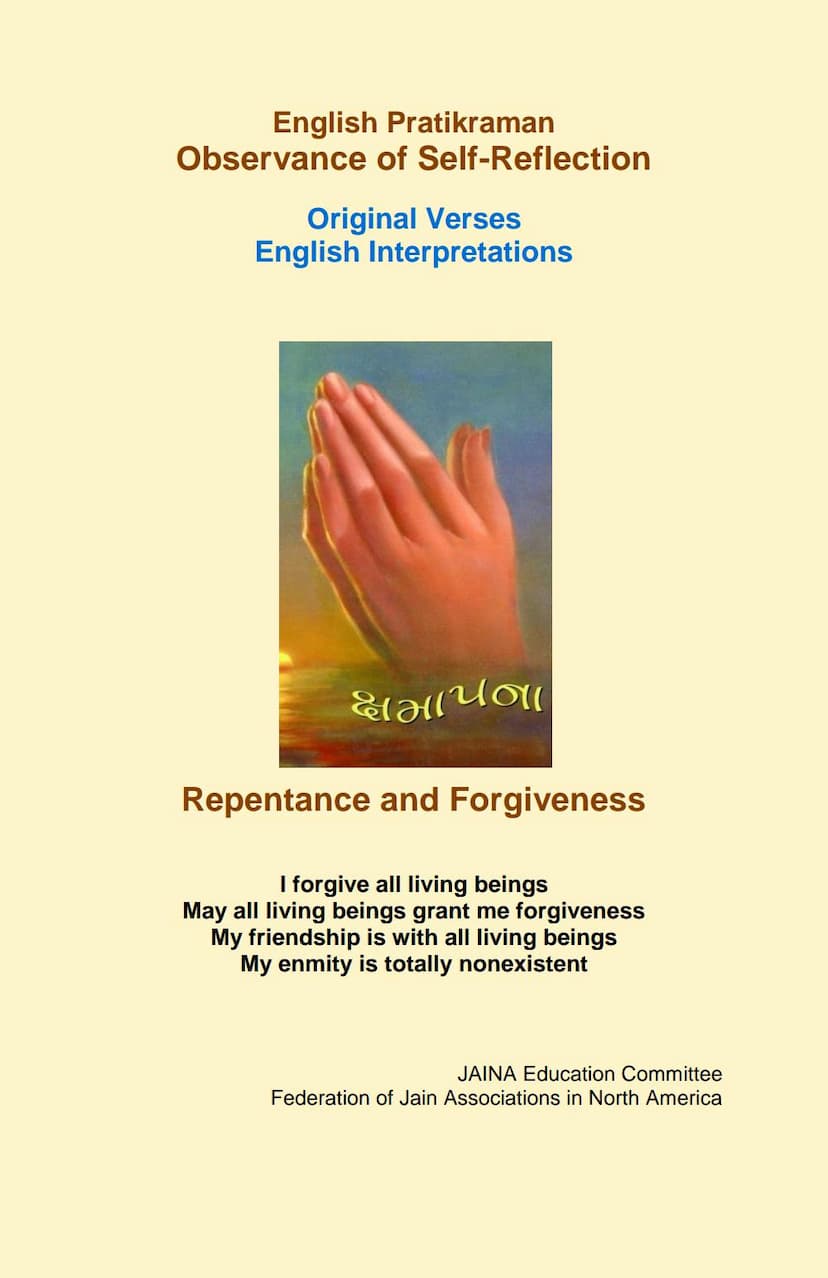
This book is a guide designed to introduce and facilitate the practice of Pratikraman, a fundamental Jain ritual, for English-speaking Jains, particularly those in the Western world. It aims to make this complex practice more accessible and understandable by providing English interpretations of the original verses and outlining the ritual's structure and significance.
Core Concept of Pratikraman:
- Self-Reflection and Repentance: Pratikraman literally means "to go back" or "to return." It is a process of reviewing one's actions, reflecting on past mistakes, confessing sins (both intentional and unintentional), and seeking forgiveness from all living beings. It also involves forgiving others.
- Purification of the Soul: The primary goal of Pratikraman is to purify the soul by removing impurities like ignorance (mithyätva) and passions (kashäyas – anger, ego, deceit, greed). This purification leads to spiritual progress and ultimately liberation (moksha).
- Connection to the Six Ävashyakas: Pratikraman is identified as the fourth of the six essential daily practices (Ävashyakas) prescribed in Jainism. The book explains that while Pratikraman is a distinct practice, modern Pratikraman rituals often encompass elements of all six Ävashyakas for completeness and accessibility.
The Six Ävashyakas (Essential Practices):
- Sämäyika (Equanimity): A state of mental calmness and neutrality, treating all beings equally, free from attachment and aversion. It's a period of renouncing worldly activities to focus on the soul.
- Chaturvimshati-stava (Devotional Prayer to Tirthankars): Reverential worship and praise of the twenty-four Tirthankars, reflecting on their noble qualities.
- Vandanä (Respecting Ascetics): Showing respect to monks and nuns, inquiring about their well-being, and seeking forgiveness for any impoliteness.
- Pratikraman (Repentance and Confession): The core practice of reviewing and confessing minor violations of vows, seeking atonement, and forgiving others.
- Käyotsarga (Meditation in a Yoga Posture): Rising above bodily activities to focus on the inner self, developing non-attachment to the body.
- Pratyakhyäna or Pachchakhana (Taking Religious Vows): Committing to self-control, renunciation of sinful activities, and undertaking pious deeds, either externally (renouncing objects) or internally (renouncing inner impurities).
Significance and Context:
- Paryushan and Das Lakshana Parva: The book highlights the importance of Pratikraman, especially during the annual Samvatsari Pratikraman, which falls on the last day of Paryushan (a major Jain festival of self-purification). Paryushan and Das Lakshana Parva (observed by the Digambar sect) are periods of intense spiritual activity, including fasting, study, and repentance.
- Purpose of Jain Festivals: Unlike secular festivals, Jain festivals emphasize renunciation, austerity, scriptural study, meditation, and devotion, fostering spiritual growth.
- Importance of Proper Performance: The book stresses that rituals are most beneficial when performed with proper physical postures (Äsana Yoga), correct pronunciation of sutras (Varna Yoga), and internal reflection (Jnana Yoga - understanding the meaning and generating relevant feelings).
- Yoga in Jainism: Jain rituals are described as incorporating elements of Kriya Yoga (physical actions and pronunciation) and Jnana Yoga (knowledge and reflection), both contributing to the purification of the soul.
Key Elements of the English Pratikraman Ritual:
The book outlines a structured ritual that includes:
- Adoption of Sämäyika: Beginning with the practice of equanimity.
- Prayer to Tirthankars: Recitation of sutras like Namutthunam and Logassa to praise the Tirthankars.
- Respecting Ascetics: Including verses for bowing to and showing respect to spiritual guides.
- Repentance and Forgiveness: This section is central, with verses for confessing sins to all beings, atoning for specific sins, and seeking universal forgiveness.
- Käyotsarga: Meditation in a yoga posture for non-attachment.
- Taking Religious Vows: Committing to specific vows for self-improvement and spiritual growth.
- Reflections on Spirituality: Concluding with verses reflecting on the true teacher, universal peace, and universal friendship.
- Conclusion of Sämäyika: Properly concluding the period of equanimity.
Target Audience and Purpose:
The book is specifically created for English-speaking Jains who may find it challenging to access or perform traditional Pratikraman rituals due to language barriers. It provides an accessible framework that retains the traditional essence and meaning while using English explanations. The authors acknowledge that reciting original sutras generates unique spiritual vibrations but emphasize that understanding the meaning is crucial.
Dedication and Values:
The book is dedicated to people committed to compassionate living, promoting nonviolence, environmental protection, and interdependence with nature. It also specifically thanks those who practice veganism and abstain from alcohol and drugs, seeing a strong connection between these lifestyle choices and the Jain principle of non-violence.
Publisher Information and Support:
Published by the JAINA Education Committee, the book is intended for private, personal, and non-commercial use. It encourages respectful use of the religious material and asks for donations to support Jain education activities. The book acknowledges various contributors and scholars for their guidance and support in its creation.
In essence, "English Pratikraman Introduction" serves as a vital bridge, making the profound spiritual practice of Pratikraman accessible and understandable for the modern, English-speaking Jain community, fostering a deeper connection to Jain principles and traditions.