
Bhagwan Mahavir Ki Acharya Parampara
Added to library: September 1, 2025
Summary
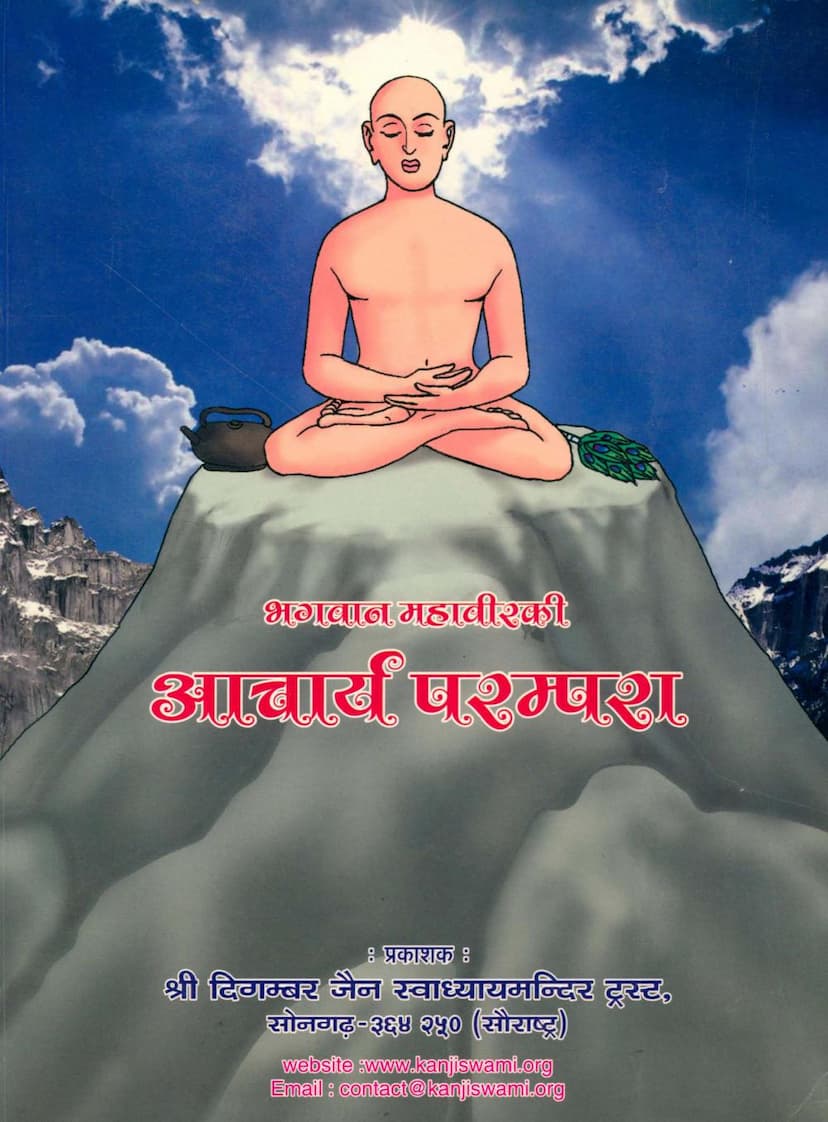
This book, "Bhagwan Mahavir Ki Acharya Parampara" (The Acharya Tradition of Lord Mahavir), published by Shri Digambar Jain Swadhyay Mandir Trust, Sonagar, is a comprehensive historical and spiritual exploration of the lineage of Jain acharyas who followed Lord Mahavir. It traces the unbroken chain of spiritual leaders, starting from the immediate disciples of Lord Mahavir and extending through centuries of Jain history.
The book aims to provide readers with an understanding of the crucial role these acharyas played in preserving, interpreting, and propagating the teachings of Lord Mahavir. It highlights their contributions in maintaining the purity and essence of Jain philosophy, particularly the Digambara tradition, through their profound scholarship, ascetic practices, and spiritual insights.
Key themes and aspects covered in the book include:
-
The Acharya Parampara: The book meticulously details the succession of acharyas, their key disciples, and the approximate periods of their spiritual leadership, often referencing historical records, inscriptions, and earlier Jain scriptures. It emphasizes the continuity of the tradition despite the challenges posed by the declining period (Dushamkal).
-
Prominent Acharyas and Their Contributions: The text introduces a vast array of acharyas, dedicating sections to their lives, philosophical contributions, and significant literary works. It begins with the immediate disciples of Lord Mahavir like Gautam Swami, followed by Jambuswami, and then proceeds to the revered Shrutakevalis and later acharyas. Special attention is given to prominent figures such as:
- Acharya Kundakunda: Described as a pivotal figure who revitalized the spiritual teachings of Mahavir.
- Acharya Bhadrabahu (first and second): Recognized for their extensive knowledge and leadership during critical periods.
- Acharya Amritchandra: Credited with reviving and elucidating the profound spiritual essence of Kundakunda's works like Samaysar, making them accessible to later generations.
- Acharya Dharasena, Pushpadanta, and Bhutabali: The foundational figures behind the Shatkhandagama, a crucial scripture in the Digambara tradition.
- Acharya Gunadhara: Author of Kashayapahuda, a foundational text on the nature of passions.
- Acharya Shivaraya (Shivakoti): Author of Bhagavati Aradhana, a significant work on ascetic conduct and practices.
- Acharya Samantabhadra: Revered as a great logician, poet, and the first to compose stotras praising the Tirthankaras, thus establishing a tradition of devotional poetry.
- Acharya Akalanka: Renowned for his formidable contributions to Jain logic and refutation of other philosophical schools.
- Acharya Vidyānanda: Known for his extensive commentaries and scholarly works, including Ashtashati.
- Acharya Nemicandra Siddhantachakravarti: Author of seminal works like Gommatasara, Labdhisara, Kshepanasara, and Trilokasara, which systematized and explained complex Jain doctrines in accessible language.
- Acharya Jinansen (Second): Author of the initial part of the Adi Purana, detailing the life of the first Tirthankara, and also completed the Jayadhavala commentary.
- Acharya Gunanandi: Author of Uttarapurana, completing the historical narrative started by Jinansen.
- Acharya Pujyapada (Devanandi): Author of Jainendra Vyakarana and the influential Tattvartha-sutra commentary, Sarvarthasiddhi.
- Acharya Vidyananda: Known for his deep understanding of logic and his work on the Tattvartha-sutra commentary, Shlokavartika.
-
Historical Context and Transmission of Knowledge: The book places the lives and works of the acharyas within their historical context, discussing the challenges of preserving and transmitting knowledge, especially after the decline of the era of Kevalis and Shrutakevalis. It explains how knowledge was passed down orally and through written texts, and the efforts made to prevent its distortion or loss.
-
Philosophical and Spiritual Contributions: Each acharya is presented not just as a historical figure but as a spiritual guide who provided profound insights into Jain philosophy, particularly the path to liberation (Moksha Marga) through Right Faith, Right Knowledge, and Right Conduct (Ratnatraya). Their writings are highlighted for their depth, clarity, and relevance to spiritual seekers.
-
The Role of the Publisher and the Authors: The publication by Shri Digambar Jain Swadhyay Mandir Trust, Sonagar, indicates a deep commitment to disseminating Jain knowledge. The mention of individuals and groups contributing financially suggests a community effort to preserve and promote this heritage. The book acknowledges the inspiration drawn from gurus like Param Pujya Sadgurudev Shri Kanji Swamiji and Pujya Behen Shri Champaben, underscoring the living tradition of spiritual guidance.
-
Chronological Presentation: The book is structured to present the acharyas chronologically, starting from the time of Lord Mahavir and progressing through the centuries. This allows readers to trace the evolution and development of the acharya tradition.
-
Emphasis on Digambara Tradition: The book specifically focuses on the acharyas within the Digambara lineage, highlighting their adherence to the principles of non-possession (aparigraha) and their commitment to the path of liberation as taught by Lord Mahavir.
In essence, "Bhagwan Mahavir Ki Acharya Parampara" serves as a vital chronicle for understanding the rich intellectual and spiritual legacy of Jainism, showcasing the immense contributions of the acharyas in shaping the philosophy and practice of the faith for generations. It is a testament to the enduring power of these spiritual leaders and their teachings.