
Jain Dharma Vigyana Ki Kasoti Par Ya Vigyana Jain Dharma Ki Kasoti Par
Added to library: September 2, 2025
Summary
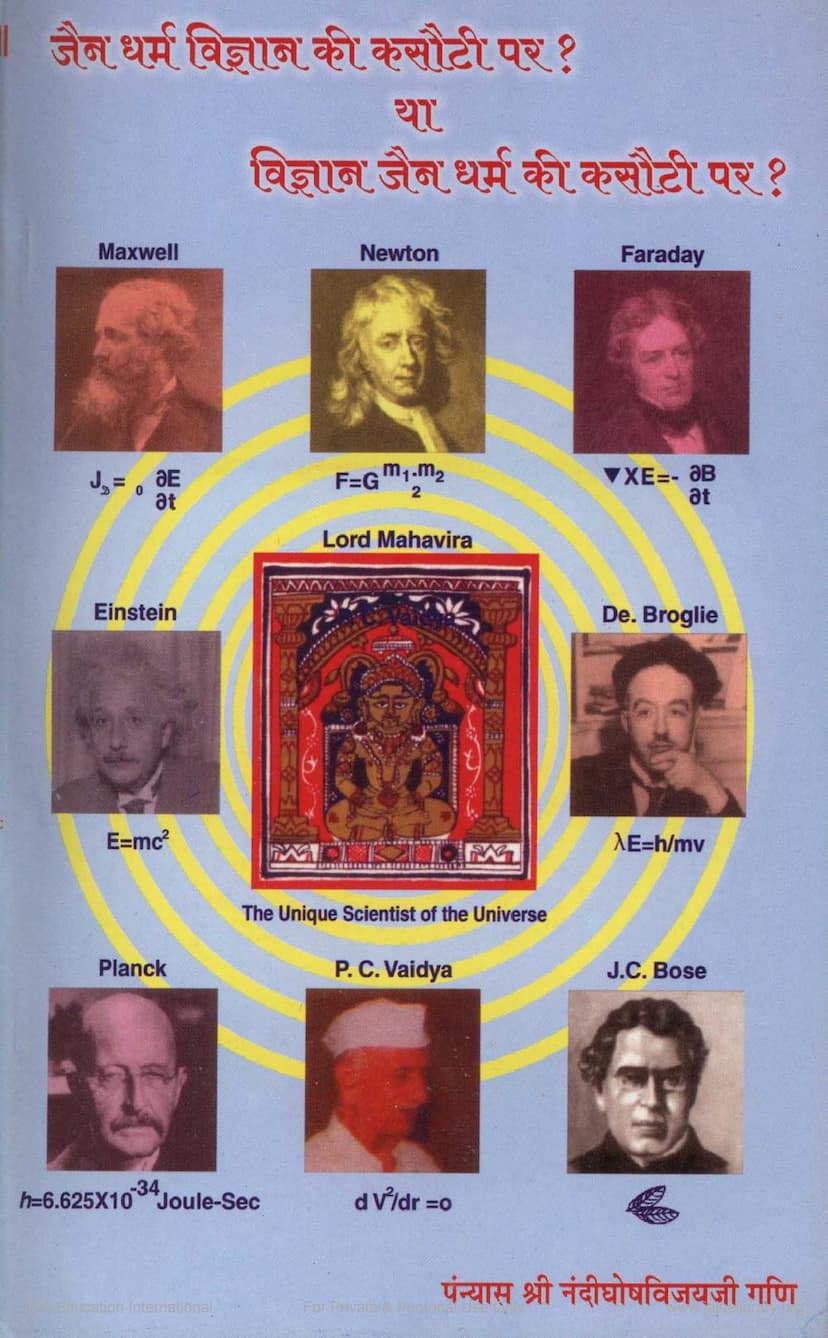
This document is a summary and analysis of the Jain text titled "Jain Dharma Vigyana ki Kasoti par ya Vigyana Jain Dharma ki Kasoti par" (Is Jain Dharma on the Anvil of Science, or is Science on the Anvil of Jain Dharma?) by Nandighoshvijay. The book, published by Bharatiya Prachin Sahitya Vaigyanik Rahasya Shodh Sanstha, aims to explore the scientific underpinnings and validity of Jain philosophy and practices.
Here's a comprehensive summary of the provided pages:
Overall Theme and Objective:
The central theme of the book is to demonstrate the profound scientific relevance and accuracy of Jainism. The author, through detailed analysis and drawing parallels with modern scientific discoveries, argues that Jain principles are not merely religious dogma but are deeply rooted in scientific truth. The book posits that rather than science proving or disproving Jainism, it is Jain Dharma that can serve as a touchstone for scientific understanding, offering insights that science is still grappling with.
Key Arguments and Concepts Explored:
-
Lord Mahavir as a Scientist: The book presents Lord Mahavir as a "global scientist" and "Trilok Guru" (Master of the Three Worlds), whose teachings are supported by scientific evidence even today. His life, asceticism, and attainment of Kevala Jnana (Omniscience) are analyzed through a lens of scientific energy and spiritual power.
-
The "Arhantva" (Aarhanthya) Power: Jain scriptures describe a unique energy associated with Tirthankaras, termed "Arhantva." The book attempts to explain this as an advanced form of bio-electromagnetic energy, generated by the fusion of spiritual attainment and karmic merit. This energy is believed to have a profound positive impact on the surrounding environment and beings.
-
Scientific Validity of Jain Principles: A significant portion of the book is dedicated to examining various Jain concepts and practices from a scientific perspective:
- Atom (Parmanu): The book delves into the Jain concept of the atom, highlighting its fundamental and indivisible nature as described in ancient texts, and contrasts it with modern atomic theory. It discusses the Jain classification of particles into "varganas" and their characteristics.
- Einstein's Theory of Relativity: The author draws parallels between Jain philosophy's concept of "anekantavada" (non-absolutism) and Einstein's theories of relativity, suggesting that both acknowledge the relative nature of truth and perspectives. However, the book also critiques some of Einstein's postulates based on Jain principles and recent scientific findings.
- The Human Body: The book explores the five types of bodies described in Jainism (audaric, vaikriya, aharak, taijas, and karmic) and their relation to modern concepts of subtle bodies and bio-electromagnetic fields (aura). It connects the purity of these subtle bodies to spiritual development and the influence of karma.
- Celibacy (Brahmacharya): The book presents a scientific analysis of celibacy, emphasizing its benefits for physical and mental health, and its connection to hormonal regulation and the endocrine system. It explains the nine vows of Brahmacharya from a scientific viewpoint.
- Asceticism (Tapa): Various forms of asceticism practiced in Jainism, such as fasting, abstaining from night meals, and specific dietary restrictions, are analyzed for their physiological and psychological benefits, aligning them with principles of modern health science and Ayurveda.
- Dietary Restrictions: The rationale behind practices like abstaining from green vegetables on festival days, the concept of "sachitta" (living) and "achitta" (non-living) water, and the prohibition of certain foods like potatoes and garlic are explained through scientific reasoning related to ahimsa (non-violence) and health.
- Sound and Mantras: The book discusses the scientific nature of sound, its potential colors, and the significance of mantra chanting. It explores the concept of "labdhis" (spiritual powers) and links them to karmic suppression and the subtle energies associated with sound.
- Devanagari Script: The scientific design and phonetic accuracy of the Devanagari script are highlighted, emphasizing its ancient origins and its alignment with modern acoustic research.
- Six Essential Duties (Shat Avashyak): The book provides a scientific explanation of the six essential daily duties for Jains, particularly focusing on their role in spiritual purification, karma reduction, and mental concentration, and how their sequence is scientifically designed for spiritual progress.
- Indriyas (Senses): A detailed comparison is made between Jain philosophy's classification of senses and modern scientific understanding of sensory perception, brain function, and the concept of "hardwares" and "softwares" in human cognition.
-
Role of the Author and Institution: The author, Pandit Nandighoshvijay Gani, is presented as a learned scholar and a disciple of Acharya Vijay Suryoday Suriji Maharaj. He is associated with the "Research Institute of Scientific Secrets from Indian Oriental Scriptures" (RISSIOS), an institution dedicated to scientifically researching ancient Indian scriptures. The book is part of RISSIOS's initiative to bridge the gap between traditional knowledge and modern scientific understanding.
Key Takeaways:
- Jainism as a Scientific Path: The book strongly advocates for Jainism as a scientifically verifiable path to spiritual liberation.
- Ancient Wisdom Meets Modern Science: It highlights how ancient Jain texts contain profound insights that are now being corroborated by modern scientific discoveries.
- Holistic Approach: Jainism offers a holistic approach that encompasses physical, mental, and spiritual well-being, all grounded in scientific principles.
- Call for Research: The book serves as an inspiration for further scientific investigation into ancient Indian literature and philosophies.
Structure and Presentation:
The book appears to be structured thematically, with each chapter exploring a different aspect of Jainism and its scientific relevance. The language used, as indicated by the text, is aimed at being accessible to a wider audience, including those with general knowledge and an interest in both science and Jainism. The inclusion of quotes from renowned scientists and spiritual leaders, along with references to Jain scriptures, adds credibility to the arguments presented. The introductory pages also feature acknowledgments of support and a dedication to spiritual masters, underscoring the blend of reverence and scientific inquiry.